April 30, 2012

Plagiarism: everything but the title

Cannot remember the origin of this picture (pdf)
[Update: another plagiarism detected on 2014/12/29; This post originated from Grégory Favre news on the excellent EPFL Infodoc mailing list, and concerns to EPFL papers]

The pressure of publication pushes back the frontiers of laziness. Here, a sole change in a paper title allows the paper to pass through reviews (if there are any reviews in this case, look at Nuit Blanche on peer review).

If you steal from one author it's plagiarism; if you steal from many it's research. (attributed to Wilson Mizner)

The most interesting example i had seen so far was a paper i reviewed on nonsubsampled contourlets (a kind of discretized, directional wavelet). It was entitled "A New Image Denoising Scheme using the Nonsubsampled Contourlet Transform", and  submitted in 2008 to Signal Processing by three authors from one of the two most populated countries in the world. Its content had about 60% overlap with a more standard and authoritative paper on the topic. A big difference resided in the typeset: the text was written with word (instead of LaTeX), the figures were drawn in Word too (instead of Xfig, InkScape). I hereby provide a little excerpt, so you can check the subtle differences:

Original paper: 2) Nonsubsampled Directional Filter Bank (NSDFB): The directional filter bank of Bamberger and Smith [18] is constructed by combining critically-sampled two-channel fan filter banks and resampling operations. The result is a tree-structured filter bank that splits the 2-D frequency plane into directional wedges. A shift-invariant directional expansion is obtained with a nonsubsampled DFB (NSDFB). The NSDFB is constructed by eliminating the downsamplers and upsamplers in the DFB (see also [20]). This is done by switching off the downsamplers/upsamplers in each two-channel filter bank in the DFB tree structure and upsampling the filters accordingly. This results in a tree composed of two-channel NSFBs. Fig. 3 illustrates a four channel decomposition. 
Submitted paper: b: Nonsubsampled Directional Filter Bank (NSDFB) The directional filter bank of Bamberger and Smith [14] is constructed by combining critically-sampled two-channel fan filter banks and resampling operations. The result is a tree-structured filter bank that splits the 2-D frequency plane into directional wedges. A shift-invariant directional expansion is obtained with a nonsubsampled DFB (NSDFB). The NSDFB is constructed by eliminating the downsamplers and upsamplers in the DFB. This is done by switching off the downsamplers/upsamplers in each two-channel filter bank in the DFB tree structure and upsampling the filters accordingly. This results in a tree composed of two-channel Nonsubsampled Filter Banks (NSFB). Fig. 3 illustrates a four channel decomposition.

But i am very unfair: the reference list was quite different. Interestingly, to the genuine honesty of the (submitting) authors, the partly copied paper EVEN cited the original paper: Arthur L. Cunha, Jianping Zhou, Minh N. Do. The nonsubsampled contourlet transform: Theory, design, and applications. IEEE Trans. on Image processing, 2006, 15(10): 3089-3101. The paper was subsequently rejected. But (i just discovered it today, 2014/12/29), that in 2011, a paper intitled "Performance Analysis of Modified Nonsubsampled Contourlet Transform for Image Denoising" was published in the Research Journal of Applied Science, Engineering and Technology. It was written by two authors from the other of the two most populated countries in the world.

It was received: March 16, 2011, accepted: May 18, 2011 and published: July 25, 2011. That's a fast track. And it possesses many cut-caste-plagiarized parts taken from A. L. da Cunha 2006 paper, as i show below, only from the introduction:

  • original: Another important feature of a transform is its stability with respect to shifts of the input signal.
  • pasted: Another important feature of a transform is its stability with respect to shifts of the input signal.
  • original: Thus, most state-of-the-art wavelet denoising algorithms (see for example [6]–[8]) use an expansion with less shift sensitivity than the standard maximally decimated wavelet decomposition—the most common being the nonsubsampled wavelet transform (NSWT) computed with the à trous algorithm [9].
  • pasted: Thus, most state-of-the-art wavelet denoising algorithms (Chang, 2000) use an expansion with less shift sensitivity than the standard maximally decimated wavelet decomposition the most common being the nonsubsampled wavelet transform (NSWT) computed with a trous algorithm (Shensa, 1992) now it is implemented using Mat lab software
  • original: In addition to shift-invariance, it has been recognized that an efficient image representation has to account for the geometrical structure pervasive in natural scenes. In this direction, several representation schemes have recently been proposed [10]–[15]. 
  • pasted: In addition to shift-invariance, it has been recognized that an efficient image representation has to account for the geometrical structure pervasive in natural scenes. In this direction, several representation schemes have recently been proposed (Donoho, 1999). 
  • original: In this paper, we propose an overcomplete transform that we call the nonsubsampled contourlet transform (NSCT). Our main motivation is to construct a flexible and efficient transform targeting applications where redundancy is not a major issue (e.g., denoising). The NSCT is a fully shift-invariant, multiscale, and multidirection expansion that has a fast implementation. The proposed construction leads to a filter-design problem that to the best of our knowledge has not been addressed elsewhere. The design problem is much less constrained than that of contourlets. This enables us to design filters with better frequency selectivity thereby achieving better subband decomposition. Using the mapping approach we provide a framework for filter design that ensures good frequency localization in addition to having a fast implementation through ladders steps. The NSCT has proven to be very efficient in image denoising and image enhancement as we show in this paper. 
  • pasted: So In this study, we propose an over complete transform that we call the modified Nonsubsampled Contourlet Transform (NSCT). Our main motivation is to construct a flexible and efficient transform targeting applications where redundancy is not a major issue (e.g., denoising). The NSCT is a fully shift-invariant, multiscale, and multidirectional expansion that has a fast implementation. The proposed construction leads to a filter-design problem that to the best of our knowledge has not been addressed elsewhere. The design problem is much less constrained than that of contourlets.This enables us to design filters with better frequency selectivity thereby achieving better subband decomposition. So the NSCT has proven to be very efficient in image denoising.So first let us see the contourlet transform and its construction.

The new authors have mostly subsampled the reference list, so to say.

I am not sure this recent "copy-paste-publish" trend deserves as much praise as Jorge Luis Borges short story: Pierre Menard, autor del Quijote.  The story narrates 20th century writer Pierre Ménard's efforts to truly re-create Cervantes' Don Quixote, beyond a mere translation, in the 17th century Spanish, sparking thoughts on authorship, imitation and appropriation (well, 60% of my words are similar here to the Wikipedia page ;) There are worse artifacts than copy indeed: "Mirrors and fatherhood are abominable because they multiply it [human kind] and extend it.(Les miroirs et la copulation sont abominables car ils multiplient le nombre des hommes)" (J. L. Borges).

The recent example did some genuine editing: the title is partly new (SOA is mainly expanded), acknowledgments have been deleted, and the references cut to item 21. That's a Catch 22.
  • Interacting with the SOA-Based Internet of Things: Discovery, Query, Selection, and On-Demand Provisioning of Web Services, IEEE TRANSACTIONS ON SERVICES COMPUTING, 2010: http://www.vs.inf.ethz.ch/res/papers/dguinard-intera-2010.pdf 
  • Service Oriented Architecture-Based Internet of Things: Discovery, Query, Selection, and On-Demand Provisioning of Web Services, International Journal of Computer Science and Telecommunications, 2012 http://www.ijcst.org/Volume3/Issue1/p7_3_1.pdf ([EDIT] funnily, the paper does not seem to be accessible anymore since the publication of this post. Still there is a Google Trace, and i have saved it on my drive, in case i'd like to publish a paper on SOA-based Internet of Things in a near future ;)
Click on images for a larger view. I just discover there is a Wikipedia page in Scientific plagiarism in India.

April 26, 2012

Conference: Fixing mathematical education

[Permission to link to author slides is being asked. Stay tuned, but do not expect too much] Meanwhile, check out Simon Leys (aka Pierre Rickmans) "Le studio de l'inutilité" (or The Hall of uselessness), with a special attention to Leys' talk on 8 Nov. 2005 at l'Université catholique de Louvain, with its nice quote to Flaubert: "I have always tried to live in an ivory tower; but a tide of shit is beating at its walls, threatening to undermine it."


"Modeling is a life skill" (Solomon Garfunkel)  

"To be able to use maths at a certain level, it is necessary to learn it at the next level" (Alexandre Borovik)

 On April 4h, 2012, a meeting held in IHP, Paris. Under the motto: How to fix our math education (Comment réparer l’enseignement des mathématiques ?). The main incentive was Solomon GARFUNKEL (COMAP Inc., Boston) and David MUMFORD (Brown University) paper "How to fix our math education", New York Times, August 28th, 2011. The paper was translated in French in Le Monde (14 septembre 2011) by Jean-Michel Kantor under the same title: Comment réparer l’enseignement des mathématiques ?. Motivated by some prominence of mathematics, and bad results of France in PISA benchmarks, the conference aimed at answering the following questions:
  • does our education system answer the needs of newly opened areas in the scientific and technical realms?
  • how do we can train citizens on the present century?
Two talks were given by Sol Garfunkel (What Mathematics Do Educated Citizens Need To Know?)  and Alexandre Borovik (What do children learn when we teach them mathematics?), chaired and translated by Jean-Michel Kantor.

Both conferences were profound, lively, though provoking and entertaining, in a different style. Sol explained the motivations behind the NYT paper: the U.S. education was local to the extreme, with highly varying levels between states, counties, and even neighborhoods. Two great 4-letter sticker acronyms (NCLB: no child left behind, under G. Bush, and RTTT: race to the top, under B. Obama) have tried, and are trying, respectively, to change this local situation, by establishing nation-wide standards. The resulting goals reside in showing that mathematics are honestly (in the meaning of the honnête homme) useful and in ensuring the availability, in the future, of mathematicians and scientists. Mathematics provide a greater ability to understand (or model) the  world: "Modeling is a life skill" (SG). Sol reminded that cellphones and MRI are as much as engineering as maths. He also pointed out how operational research, computers, statistics used to belong to math departments, and have now grown into self-owned fields. He advocated the use of real-life examples graphs through mail delivery, Voronoi cells and bisectors via *** pizza delivery from Bengladesh call centers and rain falls in Colorado. Indeed, teachers tend to provide students with answers for questions they do not ask for. Looks like the following quote, inspired by Plotin, attributed to J. Lacan:  « l’amour  est  donner  ce  qu’on  n’a  pas  à quelqu’un  qui  n’en  veut  pas ». So students (and forthcoming adults) need an ability to estimate. Maths are a necessity for survival.

Alexandre Borovik drove a useful comparison between rhythm-impaired people (because of a drunk and noisy music teacher) and people who could not understand maths. Both are survivors. He considers (following Heinrich Neuhaus "the art of piano playing") that learning is an accumulation of neurological damages, reaching a threshold level. Some of us as only survivors. In a sort of Pareto-law, he tells that 95% of the population has no ideas on how 95% of the everyday stuff works, as a follow-on to the division of labor (Adam Smith, Frederick W. Taylor). He suggests re-branding maths into a tool for personal development and spiritual enhancement. Like music, not a profession, but a personal life-style. Teachers should thus be bound to the Hippocratic oath: do not arm. Which other school (mathematics including computer science) teaches "substitution of terms", at work in simple Excel sheets that provoke bracket overload (or in French "surcharge parenthétique") when three opening brackets and cell-depending operators confuse most people. Maths should be both interesting AND difficult, remember the "Law of excessive learning of mathematics": "to be able to use maths at a certain level, it is necessary to learn it at the next level".
He finally suggests teaching math bits at certain ages: maybe basic algebraic structures at 6-9 when kids are natural question-asking machines, leaving set-theoretic abstractions for teen-age, where sex hormones drive some appeal to pure idealities.

Additional lectures:


April 22, 2012

Hyperbolets (on WITS: Where is the Starlet)

A new conference is born: UCCV 2013, The 1st IEEE Workshop on User-Centred Computer Vision, due in Florida, Tampa. on January 2013. It has been added to SIVA Conferences.

While the shearlets are enjoying some spread (cf. Shearlets from MIA 2012 or this paper), some of their contributors are involved in hyperbolets, or hyperbolic wavelets, closely related cousins. Here they are (as on WITS: where is the Starlet):

Hyperbolets

In short: An example of multi-composite wavelets with hyperbolic scaling law
Etymology: From the hyperbola (wiki entry), with a potential reference (article no available on 2011/05/26) to the parabolic scaling law of the shearlets
Origin: Glenn R. Easley, Demetrio Labate, Vishal M. Patel: Multi-composite wavelet estimation, Proceedings of SPIE Volume 8138, Wavelets and Sparsity XIV, Aug. 2011 (local copy)
Abstract: In this work, we present a new approach to image denoising by using a general representation known as wavelets with composite dilations. These representations allow for waveforms to be defined not only at various scales and locations but also at various orientations. For this talk, we present many new representations such as hyperbolets and propose combining multiple estimates from various representations to form a unique denoised image. In particular, we can take advantage of different representations to sparsely represent important features such as edges and texture independently and then use these estimates to derive an improved estimate.
The hyperbolet construction is further refined in:
G. R. Easley, D. Labate and V. M. Patel, Hyperbolic shearlets, IEEE International Conference on Image Processing (ICIP), Orlando, FL, 2012, submitted (local copy)
G. R. Easley, D. Labate, and V. M. Patel, Directional multiscale processing of images using wavelets with composite dilations, submitted 2011 (local copy)
Contributors: Glenn R. Easley (no personal page), Demetrio Labate, Vishal M. Patel
Some properties:
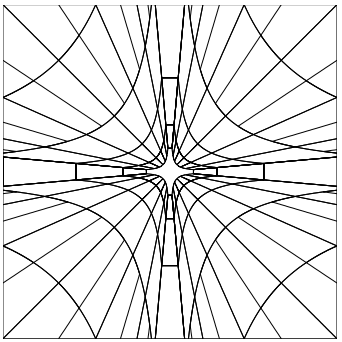
hyperbolet frequency plane

Tiling of the frequency domain associated with an hyperbolic system of wavelets with composite dilations.
Closely related to shearlets
Anecdote:
Usage:
See also: The above work might be related to Glenn R. Easley, Demetrio Labate: Critically Sampled Wavelets with Composite Dilations (local copy), preprint, 2011, which develops interesting critically sampled directional wavelet schemes (DWTShear, CShear, QDWTShear)
Comments:

More on the topic:
2D wavelets: A panorama on multiscale geometric representations, intertwining spatial, directional and frequency selectivity

March 6, 2012

WITS: Shearlets from MIA 2012


At the wonderful MIA 2012 (hey Gabriel, did i tell you how that was great?), two talks have been devoted to shearlets (Gitta Kutyniok, Gabriele Steidl), yet another geometric multiscale representation for images. And a brand new Matlab toolbox from Gabriele Steidl group named FFST (fast finite shearlet transform) and developed by Sören Haüser has been announced.

Shearlet-Zerlegung eines Auges.© Gitta Kutyniok


A good opportunity to update a little corner of WITS: Where is the Starlet, which was beginning to grow a few webs. Mmh, look like some familiar frequency domain partitioning... And now for something completely different: number 1, the shearlet... the shearlet! (Monty Python inside)


Shearlets
In short: Non-separable wavelets built out of parabolic scaling, shear, and translation operations
Etymology: From shear, a sheer distorsion
Origin: Labate, Demetrio and Lim, W-Q. and Kutyniok, Gitta and Weiss Guido, Sparse multidimensional representation using shearlets (local copy) A handful lot of papers is available here: shearlet papers. A first overview is given in Shearlets. The First Five Year (Oberwolfach Report, 2010, local copy).


Some properties: Unlike curvelets, shearlets form an affine system with a single generating mother shearlet function parameterized by a scaling, a shear, and a translation parameter. Provides the same approximation properties as curvelets, albeit with a different directional sensitivity. Exist in band-limited or compact support flavors. Possess natural, canonical smoothness spaces, called shearlet coorbit spaces, similar to Besov spaces for wavelets. Apparently extend to arbitrary any dimensions.


Usage: Image denoising, restoration, morphological component analysis
See also: The shearlet website, recently updated with ShearLab (... a rationally designed digital shearlet transform) For discrete implementation, there exists for instance a Digital Shearlet Transforms or Development of a Digital Shearlet Transform Based on Pseudo-Polar FFT. Shearlet Matlab toolboxes are available at ShearLab matlab toolboxes, local shearlet toolbox by G. Easley and FSST:
Comments: Potential a hard competitor, for years to come, to the quite oversold curvelets (IMHOlet: In My (little) Humble Opinion)


More on the topic:
2D wavelets: A panorama on multiscale geometric representations, intertwining spatial, directional and frequency selectivity

De la donnée à l'information : chimie et procédés

Un peu de publicité pour cette Journée scientifique et Professionnelle au titre alléchant : "de la donnée à l’information : Comment accroître la productivité et mieux exploiter les résultats de mesure ?"

Nancy, 31 mai 2012, ENSIC, 1, rue Grandville F-54001 Nancy, (manifestation, initialement prévue le 12 janvier 2012)

Cette "Journée Scientifique et Professionnelle" intitulée : "De la donnée à l'information: Comment accroître la productivité et mieux exploiter les résultats de mesure" est organisée par le Laboratoire Réaction et Génie des Procédés (LRGP) de l'ENSIC et la Société des Experts Chimistes de France (SECF). Cette manifestation s’adresse aux chercheurs (académiques et industriels) et aux autres acteurs de l’industrie (exploitants et analystes). Elle a pour objectif de présenter l’état de l’art et les technologies émergentes  concernant:
  • l’expérimentation haut débit,
  • les capteurs,
  • et les systèmes de traitement et de gestion de l’information.
Une exposition de fournisseurs présentant leurs équipements (matériels/logiciels), sera présentée en plus des conférences lors de cette journée.

Programme et inscription :
9h – 9h30:  Accueil à l’ENSIC Nancy
9h30 - 10h : Introduction : Allocutions d’ouverture - Présentation de la journée, de l’ENSIC et de
ses laboratoires
10h - 11h30: L’expérimentation haut débit : génération de données et amélioration de la
productivité
  • Qu’est-ce que l’expérimentation haut débit ? Matthieu GUIRARDEL. (Laboratoire du Futur P.G. de Gennes UM 5258. Pessac) 
  • La microfluidique: Intégration et parallélisation, un changement de paradigme pour les méthodes analytiques. Jean-Louis VIOVY. Institut Curie. Groupe Macromolécules et Microsystèmes en Biologie et Médecine (MMBM)
  • L’expérimentation haut débit : génération de données et amélioration de la productivité au travers des exemples de l'industrie et de la recherche académique'', Amira ABOU-HAMDAN, CHEMSPEED TECHNOLOGY AG (Augst, Suisse)
11h30 -12h : Brèves présentations des sociétés présentes à l’exposition et de leurs activités
12h -13h30 : Repas-buffet dans locaux de l’exposition
13h30 - 14h30 : Acquisition de l’information : les capteurs
  • Capteurs émergents, intervenant à préciser
  • Quelques applications des capteurs : Marie-Noëlle PONS (ENSIC Nancy)
14h30 – 15h30 : Pause et visite de l’exposition
15h30 - 17h : Exploitation de l’information / Gestion de l’information / Modélisation.
  • "Chimiométrie  : bases et   applications en agroalimentaire, en chimie et en pharmacie", Sylvie ROUSSEL (ONDALYS, Montpellier) 
  • Algorithmes et chimie : interactions entre analyses physico-chimiques et traitement des signaux, Laurent DUVAL (IFPEN)
  • Les LIMS : nouvelles tendances, Éric DEWITTE (MB Développement)
17h - 17h15 : Conclusions - Synthèse de la journée : Cornélius SCHRAUWEN. (ENSIC – LRGP)

Autres sources :

January 10, 2012

Call for papers: Advances in signal and image processing for physico-chemical analysis

(CfP: Deadline extension) Looking for new frontiers in signal and image processing applications in physico-chemical analysis? Have compressive sensing results for mass spectrometry? Got improvements on the Savitsky-Golay filter? Consider the following call for contributions.

 Call for papers: Dossier, Special issue on Advances in signal and image processing for physico-chemical analysis (pdf)


Deadlines : Final manuscript: February 17th, 2012

Oil & Gas Science and Technology - Revue d'IFP Energies Nouvelles
(online journal) 

WikiCfP: OGST-SIP-PCA

With the advent of more affordable, higher resolution or innovative data acquisition techniques (for instance hyphenated instrumentation such as two-dimensional chromatography), the need for advanced signal and image processing tools has grown in physico-chemical analysis, together with the quantity and complexity of acquired measurements. Either with mono- (signals) or two-dimensional (from hyphenated techniques to standard images) data, processing generally aims at improving quality and at providing more precise quantitative assessment of measurements of materials and products, to yield insight or access to information, chemical properties, reactive dynamics or textural properties, to name a few (for instance). Although chemometrics embrace from experimental design to calibration, more interplay between physico-chemical analysis and generic signal and image processing is believed to strengthen the two disciplines. Indeed, although they strongly differ in background and vocabulary, both specialities share similar values of best practice in carrying out identifications and comprehensive characterizations, albethey of samples or of numerical data.
The present call for papers aims at gathering contributions on recent progresses performed and emerging trends concerning (but not limited) to:
  • 1D and 2D acquisition, sparse sampling (compressive sensing), modulation/demodulation, compression, background/baseline/trend estimation, enhancement, integration, smoothing and filtering, denoising, differentiation, detection, deconvolution and source separation, resolution improvement, peak or curve fitting and matching, clustering, segmentation, multiresolution analysis (wavelets), mathematical morphology, calibration, multivariate curve resolution, property prediction, regression, data mining, tomography, visualization,
pertaining to the improvement of physico-chemical analysis techniques, including (not exclusively):
  • (high-performance) gas, liquid or ion chromatography; gel electrophoresis; diode array detector; Ultraviolet (UV), visible, Infrared (NIR, FIR), Raman or Nuclear Magnetic Resonance (NMR) spectroscopy, X-ray diffraction (XRD), X-Ray Absorption (EXAFS, XANES), mass spectrometry; photoacoustic spectroscopy (PAS); porosimetry; hyphenated techniques (GCxGC); electron microscopy (SEM, TEM),
in the following proposed domains (not exclusively):
  • catalysis, chemical engineering, oil and gas production, refining processes, petrochemicals, and other sources of energy, in particular alternative energies with a view to sustainable development.
Provisional deadlines:
  • Statement of intent: January 31st, 2012
  • Submission of final manuscript: February 17th, 2012
  • Publication: 2nd semester 2012 
Refering links:
Thierry Gallouët Igor Carron at Nuit Blanche in Around the blogs in 80 hours, Harris Georgiou, GdR ISIS

More details:
http://tinyurl.com/ogst-signal-chemical-analysis
http://www.laurent-duval.eu/lcd-cfp-ogst-2012-call-for-papers-signal-image-processing-physico-chemical-analysis.html

December 26, 2011

Computer tools for buddies

Amongst a novena of virtual life savers on computers (under Windows XP or seven of course, everything is great with MacOS or Linux), we have the following. If you just want to pick one, pick Everything! Friends keep on thanking me for that.
That's my Xmas gift for virtual life friends, for what it's worth. Update from The turn of a friendly card - Train numbering trick. What else?

December 12, 2011

Chuck Norris keyboard fact

In a long lasting trend of jokes on popular antonyms, Chuck Norris facts as well as Car Friedrich Gauss facts (The greatest mathematician since antiquity or Gauss facts thus far, see Carl Friedrich Gauss Facts), i would like to share this chuck-norris-keyboard-fact (shared on Facebook or Twitter):
Chuck Norris just sucks. If he were as smart and strong it's claimed, he'd just come here and slam my head on the keyboard asdmsdfvmwefjkmasd [space] [space] [space] [space] [space] 

Okay, i haven't posted nothing for a month, let's be serious for a while. :
ChucK: audio programming language  (Strongly-timed, Concurrent, and On-the-fly Audio Programming Language)
ChucK is a new (and developing) audio programming language for real-time synthesis, composition, performance, and now, analysis - fully supported on MacOS X, Windows, and Linux. ChucK presents a new time-based, concurrent programming model that's highly precise and expressive (we call this strongly-timed), as well as dynamic control rates, and the ability to add and modify code on-the-fly. In addition, ChucK supports MIDI, OSC, HID device, and multi-channel audio. It's fun and easy to learn, and offers composers, researchers, and performers a powerful programming tool for building and experimenting with complex audio synthesis/analysis programs, and real-time interactive control.
with something to do with keyboards...

And now for something completely different:
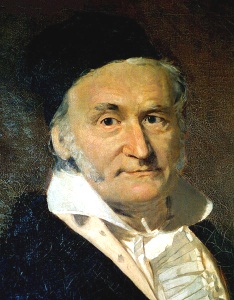
(Johann) Carl Friedrich Gauss is radical (with respect to the "roots", as in Jimmy Cliff's Roots radical) in signal processing for many reasons, and mainly for the possible invention of what is known today as the FFT or Fast Fourier transform (Cooley–Tukey FFT algorithm). You may just quote wikipedia:
This algorithm, including its recursive application, was invented around 1805 by Carl Friedrich Gauss, who used it to interpolate the trajectories of the asteroids Pallas and Juno, but his work was not widely recognized (being published only posthumously and in neo-Latin).[1][2] Gauss did not analyze the asymptotic computational time, however. Various limited forms were also rediscovered several times throughout the 19th and early 20th centuries.
or refer to Gauss and the history of the fast Fourier transform, by Michael T. Heideman, Don H. Johnson and C. Sidney Burrus as appeared behind paywalls Archive for History of Exact Sciences, Volume 34, Number 3, 265-277, DOI: 10.1007/BF00348431 or IEEE Acoustics, speech and signal processing Magazine, October 1984. A downloadable copy can be found here. The FFT has profound applied connections with early oil industry: some say (though i am not able to provide an online reference yet) that FFT algorithms were known to oil  industry years before Cooley and Tukey's (1965), and they did not even bother patent it (because patents are a way to disclose, and sometimes secret is just simpler for protecting). Other early insights on connections between electrical engineering and geophysics are to be found in Oral-History with Enders Robinson who states two main problems, related to some (yet unknown) inverse problem equation:
Gauss primes
They followed the new group, but they were also very concerned with their own special problems. Their problem was 1)to collect data, then 2) produce a map of where to drill the oil well.
So what about an even stronger Gauss fact? Well, Gauss can beat Stalin, Poutin AND  Medvedev. As read on
За нормальное распределение (in french, Images des mathématiques La loi normale de Gauss s’invite dans les manifs. Carl Friedrich Gauss depicted with goat's horns? No way, since Gauss is often described as the fox of mathematics, for his abilities to hide his (mathematical proofs') tracks on the sand (or snow) with his tail.
Abel said, `He is like the fox, who effaces his tracks in the sand with his tail'. Gauss, in defense of his style, said, `no self-respecting architect leaves the scaffolding in place after completing the building'.
Quoted in Startribune:
"Obviously, he doesn't agree with Gauss," one commenter wrote disdainfully, referring to pioneering mathematician Carl Friedrich Gauss, who lived 200 years ago. Disenchanted Russians argue that United Russia's reported election results are so improbable as to violate Gauss' groundbreaking work on statistics.
One slogan: "we beleive in Gauss, not in Churov". Vladimir Churov is the president of Central Election Commission of Russia, but apparently breeches the central limit theorem. So as Stalin used to say: Gauss, how many divisions? Let's look at Gauss integers (left image). Chuck Norris vs. Gauss? Battle's ongoing.

Update on Pixel shaker (aka Frédéric Morain-Nicolier): Carl Gauss strongly refuted Chuck Norris conjecture (get a snapshot now, this infringes standard arithmetics) that 1550 < 6450. A century before.

November 11, 2011

Unary Day

I wouldn't have spent this special day with unary sequence 11h1111s at 11/11/11 without a terrible pun, mentioning it as the anniversary of Attila, since it's "an invasion of the Huns" ("huns" for "ones", uttered with an awful accent); even made a Facebook page for that: Attila Fest. Not proud :) Yet this dull (not in the Ramanujan sense) sequence reminded me of two nice formula for the golden ratio (aka $\phi$, or the divine proportion): one rational, one radical. So it seems $\phi$ could be tamed (or approched) quite easily. Indeed, it is one of the simplest non-rational numbers, as a root of a basic equation of degree 2. Thus, far from being transcendental. Surprisingly, $\phi$ bears some kind of transcendence (in the religious sense) as it is, somehow, beyond the grasp of the human mind, meaning it cannot be approched easily in a "rational" way, i.e. worse that any other number, as stated in a theorem by Adolf Hurwitz (1856-1919). In the following formula, there exist infinitely many $m$ and $n$ for any irrational $\xi$, and the constant $\sqrt(5)$ cannot be improved, due to $\phi$.
The radical formula for $\phi$ above is the key: with divisions by ones, denominators increase very very slow. Contrary to common knowledge (in Age of Empires) that Huns are faster. Thus being, in think i'd better go back to a paper on applications of unary filters, instead of making dull puns.

November 4, 2011

Advances in signal and image processing for physico-chemical analysis

Looking for new frontiers in signal and image processing applications in chemical related analysis? Consider the following call for contributions.

 Call for papers: Dossier, Special issue on Advances in signal and image processing for physico-chemical analysis (pdf)

Deadlines - Intent: December 12th, 2011 / Final manuscript: January 8th, 2012

Oil & Gas Science and Technology - Revue d'IFP Energies Nouvelles
(online journal)

With the advent of more affordable, higher resolution or innovative data acquisition techniques (for instance hyphenated instrumentation such as two-dimensional chromatography), the need for advanced signal and image processing tools has grown in physico-chemical analysis, together with the quantity and complexity of acquired measurements. Either with mono- (signals) or two-dimensional (from hyphenated techniques to standard images) data, processing generally aims at improving quality and at providing more precise quantitative assessment of measurements of materials and products, to yield insight or access to information, chemical properties, reactive dynamics or textural properties, to name a few (for instance). Although chemometrics embrace from experimental design to calibration, more interplay between physico-chemical analysis and generic signal and image processing is believed to strengthen the two disciplines. Indeed, although they strongly differ in background and vocabulary, both specialities share similar values of best practice in carrying out identifications and comprehensive characterizations, albethey of samples or of numerical data.
The present call for papers aims at gathering contributions on recent progresses performed and emerging trends concerning (but not limited) to:
  • 1D and 2D acquisition, sparse sampling (compressive sensing), modulation/demodulation, compression, background/baseline/trend estimation, enhancement, integration, smoothing and filtering, denoising, differentiation, detection, deconvolution and source separation, resolution improvement, peak or curve fitting and matching, clustering, segmentation, multiresolution analysis, mathematical morphology, calibration, multivariate curve resolution, property prediction, regression, data mining, tomography, visualization,
pertaining to the improvement of physico-chemical analysis techniques, including (not exclusively):
  • (high-performance) gas, liquid or ion chromatography; gel electrophoresis; diode array detector; Ultraviolet (UV), visible, Infrared (NIR, FIR), Raman or Nuclear Magnetic Resonance (NMR) spectroscopy, X-ray diffraction (XRD), X-Ray Absorption (EXAFS, XANES), mass spectrometry; photoacoustic spectroscopy (PAS); porosimetry; hyphenated techniques; electron microscopy (SEM, TEM),
in the following proposed domains:
  • catalysis, chemical engineering, oil and gas production, refining processes, petrochemicals, and other sources of energy, in particular alternative energies with a view to sustainable development.
Provisional deadlines:
  • Statement of intent: December 12th, 2011
  • Submission of final manuscript: January 8th, 2012
  • Publication: 2nd semester 2012

August 15, 2011

Opinion on Melancholia

Lars von Trier has recently proposed to the audience the Cannes awarded movie Melancholia. As for the brunette and the blonde sisters (one organized and the other erratic), as for the two planets (Earth and Mechancolia) featured in the movie (one rotating predictively for ever around the sun, the other wobbling to its final destination), the movie has attracted two-pole reviews, either good or bad (in random order). Melancholia, as a science-fiction movie (is it?), dwells on a the line that joins Stanley Kubrick's 2001 and Andrei Tarkovsky's Solaris. On very projective line, between "zero and infinity" (le zéro et l'infini), which translates into French Darkness at noon by Arthur Koestler.

Von Trier's Mechancolia of course reminds of Albrecht Dürer's (the painter, not the insect - see Monty Python's in three languages) Melencolia I ou La Melencolia. The engraving has suffered many interpretations, with all its symbolic details (magic square, sphere, truncated rhombohedron...) combined with the standard inference of "Melencolia I" or "Melencholia Imaginativa", in which  "imagination" predominates over "mind" or "reason".

Beautiful picture, ear-deafening Wagner music, fine directed, the film would only need some direction. After clear-cut editing, it would probably make a nice desktop wallpaper.

Oh yes, i forgot to tell you (for those who have an eye for finest details, these words are from another SicFi movie Dune), the Signal Processing: Special issue on Advances in Multirate Filter Bank Structures and Multiscale Representations is out: at ScienceDirect (Signal Processing, Volume 91, Issue 12), here in a blog post or on a separate page. Feel like melancholia as the issue is finally out.


July 22, 2011

Sparse is compact and in press (special issue)

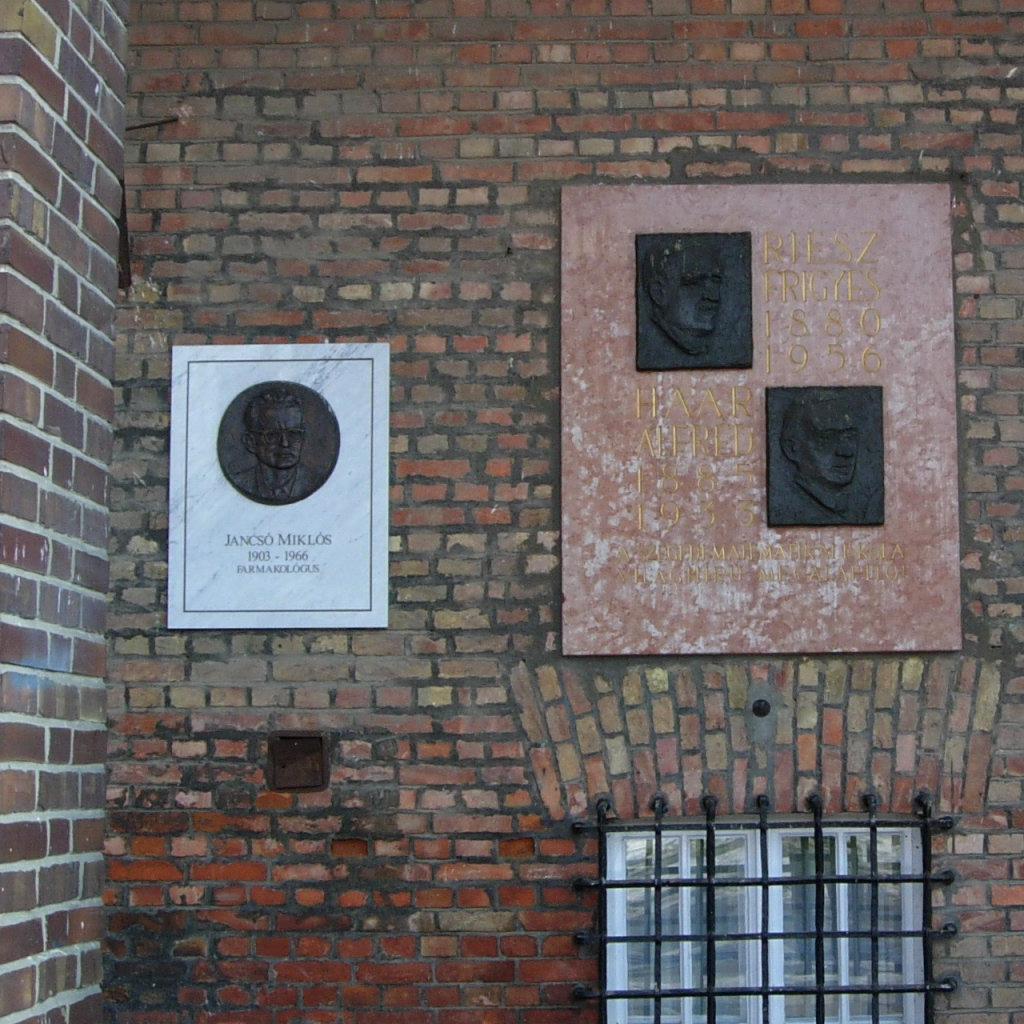
Szeged University Memorial plaque in honor of Haar and Riesz
All papers in press for the Special Issue of Signal Processing on "Multirate Filter Bank Structures and Multiscale Representations" (announced here at Nuit Blanche)  are now available online and published in Volume 91, Issue 12, December 2011. 100 years after Alfred Haar seed, with the help of about 100 reviewers. While waiting for the paperback versions in the solid world, have a look at the following contributions in digital form, gathered on a dedicated page Signal Processing: Special issue on Advances in Multirate Filter Bank Structures and Multiscale Representations. They deal with 1-D signals to 2-D images, from image coding to compressive sensing, from fixed to adaptive representations, with a common bias toward sparsity. Forthcoming "call for papers" in 2011, related to sparsity, were gathered in a previous post: Sparse is abundant.

A century after the first outbreak of wavelets in Alfred Haar's thesis in 1909, filter banks and wavelet transforms lie at the heart of many digital signal processing and communication systems. During the last thirty years, they have been the focus of tremendous theoretical advances and practical applications in a growing digital world. They are for instance present, as local linear expansions, at the core of many existing or forthcoming audio, image or video compression algorithms.
Beyond standards, many exciting developments have emerged in filter banks and wavelets from the confrontation between scientists from different fields (including signal and image processing, computer science, harmonic analysis, approximation theory, statistics, bioengineering, physics,\ldots). At their confluence, multiscale representations of data, associated with their efficient processing in a multirate manner, have unveiled tools or refreshed methods impacting the whole data management process, from acquisition to interpretation, through communications, recovery and visualization. Multirate structures naturally shelter key concepts such as the duality between redundancy and sparsity, as well as means for extracting low dimensional structures from higher ones. In image processing in particular, various extensions of wavelets provide smart linear tools for building insightful geometrical representations of natural images.
The purpose of this special issue is to report on recent progresses performed, and emerging trends, in the domain of multirate filter banks and multiscale representations of signals and images. Topics addressed faithfully reflect the active research pertaining to this field, including sparse representations of (1-D) signals to (2-D) images, multiscale models and processing, shrinkage and denoising, compressive sensing, oversampled discrete frames, geometrical multiscale transforms, hybrid and adaptive representations and non-separable lifting for image compression.


Fast orthogonal sparse approximation algorithms over local dictionaries (DOI:10.1016/j.sigpro.2011.01.004)

Boris Mailhé and Rémi Gribonval and Pierre Vandergheynst and Frédéric Bimbot
Abstract:

In this work we present a new greedy algorithm for sparse approximation called LocOMP.
LocOMP is meant to be run on local dictionaries made of atoms with much shorter supports than the signal length.
This notably encompasses shift-invariant dictionaries and time-frequency dictionaries, be they monoscale or multiscale.
In this case, very fast implementations of Matching Pursuit are already available.
LocOMP is almost as fast as Matching Pursuit while approaching the signal almost as well as the much slower Orthogonal Matching Pursuit.
Keywords:

Sparse approximation; Greedy algorithms; Shift invariance; Orthogonal Matching Pursuit

Recursive Nearest Neighbor Search in a Sparse and Multiscale Domain for Comparing Audio Signals (DOI:10.1016/j.sigpro.2011.03.002)

Bob Sturm and Laurent Daudet
Abstract:

We investigate recursive nearest neighbor search in a sparse domain
at the scale of audio signals.
Essentially, to approximate the cosine distance between the signals
we make pairwise comparisons between
the elements of localized sparse models built from
large and redundant multiscale dictionaries of time-frequency atoms.
Theoretically, error bounds on these approximations provide
efficient means for quickly reducing the search space to
the nearest neighborhood of a given data;
but we demonstrate here that the tightest bound
involving a probabilistic assumption does not provide a practical approach
for comparing audio signals with respect to this distance measure.
Our experiments show, however, that regardless of these non-discriminative bounds,
we only need to make a few atom pair comparisons
to reveal, e.g., the position of origin of an excerpted signal,
or melodies with similar time-frequency structures.
Keywords:

Multiscale decomposition; Sparse approximation; Time—frequency dictionary; Audio similarity

Symmetric Tight Frame Wavelets With Dilation Factor M=4 (DOI:10.1016/j.sigpro.2011.05.005)

Farras Abdelnour
Abstract:

In this paper we discuss a new set of symmetric tight frame wavelets with the associated filterbank outputs downsampled by four at each stage. The frames consist of seven generators obtained from the lowpass filter using spectral factorization, with the lowpass filter obtained via Groebner basis method. The filters are simple to construct, and offer smooth scaling functions and wavelets. Additionally, the filterbanks presented in this paper have limited redundancy while maintaining the smoothness of underlying limit functions. The filters are linear phase (symmetric), FIR, and the resulting wavelets possess vanishing moments.
Keywords:

Wavelet transform; Frame; Symmetric filterbanks; Multiresolution analysis

Activelets: Wavelets for Sparse Representation of Hemodynamic Responses (DOI:10.1016/j.sigpro.2011.03.008)

Ildar Khalidov and Jalal Fadili and Francois Lazeyras and Dimitri Van De Ville and Michael Unser
Abstract:

We propose a new framework to extract the activity-related component in the BOLD functional Magnetic Resonance Imaging (fMRI) signal. As opposed to traditional fMRI signal analysis techniques, we do not impose any prior knowledge of the event timing. Instead, our basic assumption is that the activation pattern is a sequence of short and sparsely-distributed stimuli, as is the case in slow event-related fMRI.

We introduce new wavelet bases, termed ``activelets'', which sparsify the activity-related BOLD signal. These wavelets mimic the behavior of the differential operator underlying the hemodynamic system. To recover the sparse representation, we deploy a sparse-solution search algorithm.

The feasibility of the method is evaluated using both synthetic and experimental fMRI data. The importance of the activelet basis and the non-linear sparse recovery algorithm is demonstrated by comparison against classical B-spline wavelets and linear regularization, respectively.
Keywords:

BOLD fMRI; Hemodynamic response; Wavelet design; Sparsity; l1 minimization

Resonance-Based Signal Decomposition: A New Sparsity-Enabled Signal Analysis Method (DOI:10.1016/j.sigpro.2010.10.018)

Ivan Selesnick
Abstract:

Numerous signals arising from physiological and physical processes, in addition to being non-stationary, are moreover a mixture of sustained oscillations and non-oscillatory transients that are difficult to disentangle by linear methods. Examples of such signals include speech, biomedical, and geophysical signals. Therefore, this paper describes a new nonlinear signal analysis method based on signal resonance, rather than on frequency or scale, as provided by the Fourier and wavelet transforms. This method expresses a signal as the sum of a ‘high-resonance’ and a ‘low-resonance’ component—a high-resonance component being a signal consisting of multiple simultaneous sustained oscillations; a low-resonance component being a signal consisting of non-oscillatory transients of unspecified shape and duration. The resonance-based signal decomposition algorithm presented in this paper utilizes sparse signal representations, morphological component analysis, and constant-Q (wavelet) transforms with adjustable Q-factor.
Keywords:
Sparse signal representation; Constant-Q transform; Wavelet transform; Morphological component analysis

Multivariate empirical mode decomposition and application to multichannel filtering (DOI:10.1016/j.sigpro.2011.01.018)

Amar Kachenoura and Julien Fleureau and Laurent Albera and Jean-Claude Nunes and Lotfi Senhadji
Abstract:

Empirical Mode Decomposition (EMD) is an emerging topic in signal processing research, applied in various practical fields due in particular to its data-driven filter bank properties. In this paper, a novel EMD approach called X-EMD (eXtended-EMD) is proposed, which allows for a straightforward decomposition of mono- and multivariate signals without any change in the core of the algorithm. Qualitative results illustrate the good behavior of the proposed algorithm whatever the signal dimension is. Moreover, a comparative study of X-EMD with classical mono- and multivariate methods is presented and shows its competitiveness. Besides, we show that X-EMD extends the filter bank properties enjoyed by monovariate EMD to the case of multivariate EMD. Finally, a practical application on multi-channel sleep recording is presented.
Keywords:
Mono- and multivariate empirical mode decomposition; Filter bank structure; Electroencephalography data analysis

A Panorama on Multiscale Geometric Representations, Intertwining Spatial, Directional and Frequency Selectivity (DOI:10.1016/j.sigpro.2011.04.025)

Laurent Jacques and Laurent Duval and Caroline Chaux and Gabriel Peyré
Abstract:

The richness of natural images makes the quest for optimal representations in
image processing and computer vision challenging. The latter observation has
not prevented the design of image representations, which trade off between
efficiency and complexity, while achieving accurate rendering of smooth regions
as well as reproducing faithful contours and textures. The most recent ones,
proposed in the past decade, share an hybrid heritage highlighting the
multiscale and oriented nature of edges and patterns in images. This paper
presents a panorama of the aforementioned literature on decompositions in
multiscale, multi-orientation bases or dictionaries. They typically exhibit
redundancy to improve sparsity in the transformed domain and sometimes its
invariance with respect to simple geometric deformations (translation,
rotation). Oriented multiscale dictionaries extend traditional wavelet
processing and may offer rotation invariance. Highly redundant dictionaries
require specific algorithms to simplify the search for an efficient (sparse)
representation. We also discuss the extension of multiscale geometric
decompositions to non-Euclidean domains such as the sphere or arbitrary meshed
surfaces. The etymology of panorama suggests an overview, based on a choice of
partially overlapping "pictures". We hope that this paper will contribute to
the appreciation and apprehension of a stream of current research directions in
image understanding.
Keywords:
Review; Multiscale; Geometric representations; Oriented decompositions; Scale-space; Wavelets; Atoms; Sparsity; Redundancy; Bases; Frames; Edges; Textures; Image processing; Haar wavelet; Non-Euclidean wavelets

Bandlet Image Estimation with Model Selection (DOI:10.1016/j.sigpro.2011.01.013)

Charles Dossal and Stéphane Mallat and Erwan Le Pennec
Abstract:

To estimate geometrically regular images in the white noise model and
obtain an adaptive near asymptotic minimaxity result, we consider a model selection
based bandlet
estimator. This bandlet estimator combines the best basis selection
behaviour of the model selection and the
approximation properties of the bandlet dictionary.
We derive its near asymptotic minimaxity for geometrically regular images as an
example of model selection with general dictionary of orthogonal bases.
This paper is thus
also a self contained tutorial on model selection with orthogonal bases dictionary.
Keywords:
Model selection; White noise model; Image estimation; Geometrically regular functions; Bandlets

Augmented Lagrangian based Reconstruction of non-uniformly sub-Nyquist sampled MRI data (DOI:10.1016/j.sigpro.2011.04.033)

Jan Aelterman and Hiep Luong and Bart Goossens and Aleksandra Pizurica and Wilfried Philips
Abstract:

MRI has recently been identified as a promising application for compressed-sensing-like regularization because of its potential to speed up the acquisition while maintaining the image quality. Thereby non-uniform k-space trajectories, such as random or spiral trajectories, are becoming more and more important, because they are well suited to be used within the compressed-sensing (CS) acquisition framework. In this paper, we propose a new reconstruction technique for non-uniformly sub-Nyquist sampled k-space data. Several parts make up this technique, such as the non-uniform Fourier transform (NUFT), the discrete shearlet transform and a augmented Lagrangian based optimization algorithm. Because MRI images are real-valued, we introduce a new imaginary value suppressing prior, which attenuates imaginary components of MRI images during reconstruction, resulting in a better overall image quality. Further, a preconditioning based on the Voronoi cell size of each NUFT data point speeds up the conjugate gradient optimization used as part of the optimization algorithm. The resulting algorithm converges in a relatively small number of iterations and guarantees solutions that fully comply to the imposed constraints. The results show that the algorithm is applicable not only to sub-Nyquist sampled k-space reconstruction, but also to MR image fusion and/or resolution enhancement.
Keywords:
Augmented Lagrangian methods; MRI reconstruction; Non-uniform Fourier transform; Shearlet; Compressed sensing

Matching Pursuit Shrinkage in Hilbert Spaces (DOI:10.1016/j.sigpro.2011.04.010)

Tieyong Zeng and Francois Malgouyres
Abstract:

In this paper, we study a variant of the Matching Pursuit named Matching Pursuit Shrinkage. Similarly to the Matching Pursuit it seeks for an approximation of a datum living in a Hilbert space by a sparse linear expansion in a countable set of atoms. The difference with the usual Matching Pursuit is that, once an atom has been selected, we do not erase all the information along the direction of this atom. Doing so, we can evolve slowly along that direction. The goal is to attenuate the negative impact of bad atom selections.

We analyze the link between the shrinkage function used by the algorithm and the fact that the result belongs to $l^2$, $l^1$ and $l^0$ space. Experimental results are also reported to show the potential application of the proposed algorithm.
Keywords:
Dictionary; Matching pursuit; Shrinkage; Sparse representation

Non Separable Lifting Scheme with Adaptive Update Step for Still and Stereo Image Coding (DOI:10.1016/j.sigpro.2011.01.003)

Mounir Kaaniche and Amel Benazza-Benyahia and Béatrice Pesquet-Popescu and Jean-Christophe Pesquet
Abstract:

Many existing works related to lossy-to-lossless multiresolution image compression are based on the lifting concept. It is worth noting that a separable lifting scheme may not appear very efficient to cope with the 2D characteristics of edges which are neither horizontal nor vertical. In this paper, we propose to use 2D non-separable lifting schemes that still enable progressive reconstruction and exact decoding of images. Their relevant advantage is to yield a tractable optimization of all the involved decomposition operators. More precisely, we design the prediction operators by minimizing the variance of the detail coefficients. Concerning the update filters, we propose a new optimization criterion which aims at reducing the inherent aliasing artifacts. A theoretical analysis of the proposed method is conducted in terms of the adaptation criterion considered in the optimization of the update filter. Simulations carried out on still images and residual ones generated from stereo pairs show the benefits which can be drawn from the proposed optimization of the lifting operators.
Keywords:
Lossless compression; Progressive reconstruction; Lifting schemes; Separable transforms; Non-separable transforms; Adaptive transforms; Multiresolution analysis; Wavelets; Stereo coding

Film-opéra-concert Ariodante

  #Ariodante de #Händel par les Arts Florissants  en opéra-concert-film est #amazing ; trois raisons, deux futiles.  c'est 16 euros, ...