July 22, 2011

Sparse is compact and in press (special issue)

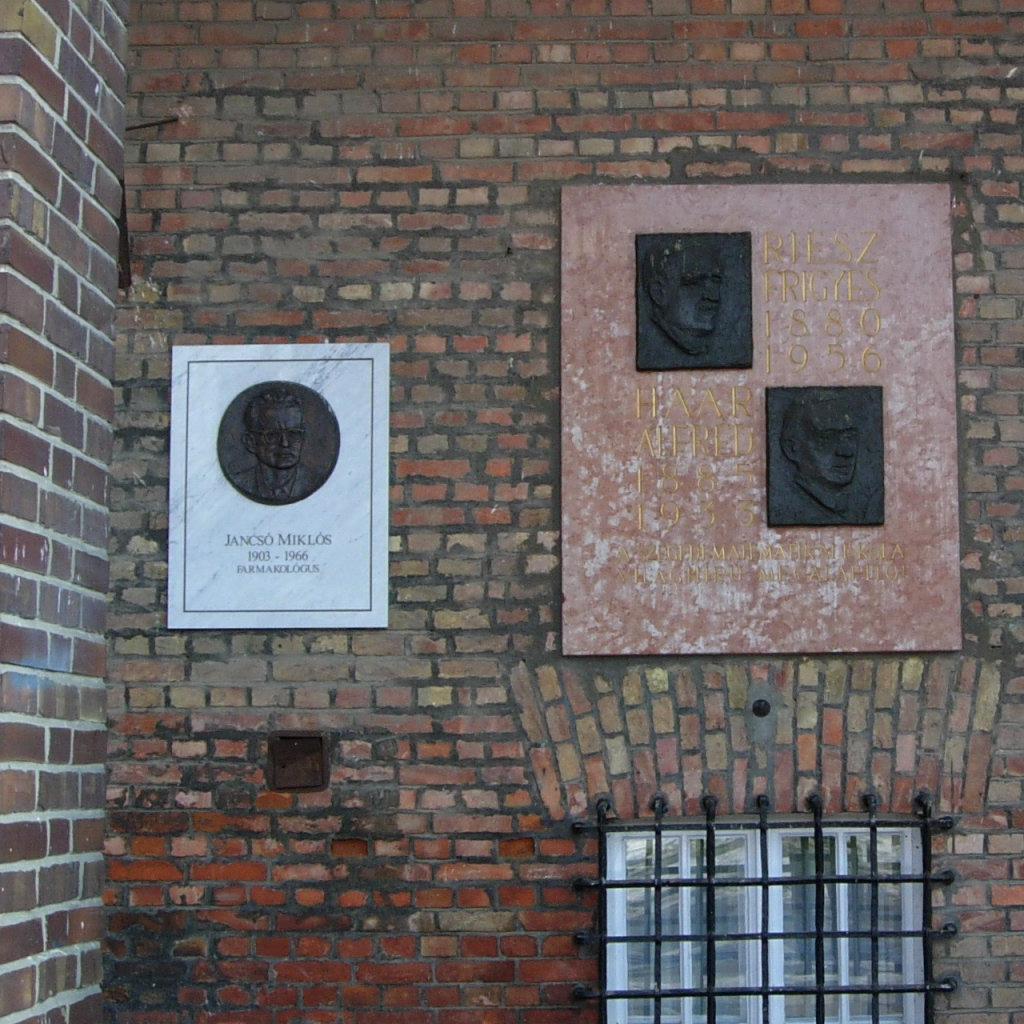
Szeged University Memorial plaque in honor of Haar and Riesz
All papers in press for the Special Issue of Signal Processing on "Multirate Filter Bank Structures and Multiscale Representations" (announced here at Nuit Blanche)  are now available online and published in Volume 91, Issue 12, December 2011. 100 years after Alfred Haar seed, with the help of about 100 reviewers. While waiting for the paperback versions in the solid world, have a look at the following contributions in digital form, gathered on a dedicated page Signal Processing: Special issue on Advances in Multirate Filter Bank Structures and Multiscale Representations. They deal with 1-D signals to 2-D images, from image coding to compressive sensing, from fixed to adaptive representations, with a common bias toward sparsity. Forthcoming "call for papers" in 2011, related to sparsity, were gathered in a previous post: Sparse is abundant.

A century after the first outbreak of wavelets in Alfred Haar's thesis in 1909, filter banks and wavelet transforms lie at the heart of many digital signal processing and communication systems. During the last thirty years, they have been the focus of tremendous theoretical advances and practical applications in a growing digital world. They are for instance present, as local linear expansions, at the core of many existing or forthcoming audio, image or video compression algorithms.
Beyond standards, many exciting developments have emerged in filter banks and wavelets from the confrontation between scientists from different fields (including signal and image processing, computer science, harmonic analysis, approximation theory, statistics, bioengineering, physics,\ldots). At their confluence, multiscale representations of data, associated with their efficient processing in a multirate manner, have unveiled tools or refreshed methods impacting the whole data management process, from acquisition to interpretation, through communications, recovery and visualization. Multirate structures naturally shelter key concepts such as the duality between redundancy and sparsity, as well as means for extracting low dimensional structures from higher ones. In image processing in particular, various extensions of wavelets provide smart linear tools for building insightful geometrical representations of natural images.
The purpose of this special issue is to report on recent progresses performed, and emerging trends, in the domain of multirate filter banks and multiscale representations of signals and images. Topics addressed faithfully reflect the active research pertaining to this field, including sparse representations of (1-D) signals to (2-D) images, multiscale models and processing, shrinkage and denoising, compressive sensing, oversampled discrete frames, geometrical multiscale transforms, hybrid and adaptive representations and non-separable lifting for image compression.


Fast orthogonal sparse approximation algorithms over local dictionaries (DOI:10.1016/j.sigpro.2011.01.004)

Boris Mailhé and Rémi Gribonval and Pierre Vandergheynst and Frédéric Bimbot
Abstract:

In this work we present a new greedy algorithm for sparse approximation called LocOMP.
LocOMP is meant to be run on local dictionaries made of atoms with much shorter supports than the signal length.
This notably encompasses shift-invariant dictionaries and time-frequency dictionaries, be they monoscale or multiscale.
In this case, very fast implementations of Matching Pursuit are already available.
LocOMP is almost as fast as Matching Pursuit while approaching the signal almost as well as the much slower Orthogonal Matching Pursuit.
Keywords:

Sparse approximation; Greedy algorithms; Shift invariance; Orthogonal Matching Pursuit

Recursive Nearest Neighbor Search in a Sparse and Multiscale Domain for Comparing Audio Signals (DOI:10.1016/j.sigpro.2011.03.002)

Bob Sturm and Laurent Daudet
Abstract:

We investigate recursive nearest neighbor search in a sparse domain
at the scale of audio signals.
Essentially, to approximate the cosine distance between the signals
we make pairwise comparisons between
the elements of localized sparse models built from
large and redundant multiscale dictionaries of time-frequency atoms.
Theoretically, error bounds on these approximations provide
efficient means for quickly reducing the search space to
the nearest neighborhood of a given data;
but we demonstrate here that the tightest bound
involving a probabilistic assumption does not provide a practical approach
for comparing audio signals with respect to this distance measure.
Our experiments show, however, that regardless of these non-discriminative bounds,
we only need to make a few atom pair comparisons
to reveal, e.g., the position of origin of an excerpted signal,
or melodies with similar time-frequency structures.
Keywords:

Multiscale decomposition; Sparse approximation; Time—frequency dictionary; Audio similarity

Symmetric Tight Frame Wavelets With Dilation Factor M=4 (DOI:10.1016/j.sigpro.2011.05.005)

Farras Abdelnour
Abstract:

In this paper we discuss a new set of symmetric tight frame wavelets with the associated filterbank outputs downsampled by four at each stage. The frames consist of seven generators obtained from the lowpass filter using spectral factorization, with the lowpass filter obtained via Groebner basis method. The filters are simple to construct, and offer smooth scaling functions and wavelets. Additionally, the filterbanks presented in this paper have limited redundancy while maintaining the smoothness of underlying limit functions. The filters are linear phase (symmetric), FIR, and the resulting wavelets possess vanishing moments.
Keywords:

Wavelet transform; Frame; Symmetric filterbanks; Multiresolution analysis

Activelets: Wavelets for Sparse Representation of Hemodynamic Responses (DOI:10.1016/j.sigpro.2011.03.008)

Ildar Khalidov and Jalal Fadili and Francois Lazeyras and Dimitri Van De Ville and Michael Unser
Abstract:

We propose a new framework to extract the activity-related component in the BOLD functional Magnetic Resonance Imaging (fMRI) signal. As opposed to traditional fMRI signal analysis techniques, we do not impose any prior knowledge of the event timing. Instead, our basic assumption is that the activation pattern is a sequence of short and sparsely-distributed stimuli, as is the case in slow event-related fMRI.

We introduce new wavelet bases, termed ``activelets'', which sparsify the activity-related BOLD signal. These wavelets mimic the behavior of the differential operator underlying the hemodynamic system. To recover the sparse representation, we deploy a sparse-solution search algorithm.

The feasibility of the method is evaluated using both synthetic and experimental fMRI data. The importance of the activelet basis and the non-linear sparse recovery algorithm is demonstrated by comparison against classical B-spline wavelets and linear regularization, respectively.
Keywords:

BOLD fMRI; Hemodynamic response; Wavelet design; Sparsity; l1 minimization

Resonance-Based Signal Decomposition: A New Sparsity-Enabled Signal Analysis Method (DOI:10.1016/j.sigpro.2010.10.018)

Ivan Selesnick
Abstract:

Numerous signals arising from physiological and physical processes, in addition to being non-stationary, are moreover a mixture of sustained oscillations and non-oscillatory transients that are difficult to disentangle by linear methods. Examples of such signals include speech, biomedical, and geophysical signals. Therefore, this paper describes a new nonlinear signal analysis method based on signal resonance, rather than on frequency or scale, as provided by the Fourier and wavelet transforms. This method expresses a signal as the sum of a ‘high-resonance’ and a ‘low-resonance’ component—a high-resonance component being a signal consisting of multiple simultaneous sustained oscillations; a low-resonance component being a signal consisting of non-oscillatory transients of unspecified shape and duration. The resonance-based signal decomposition algorithm presented in this paper utilizes sparse signal representations, morphological component analysis, and constant-Q (wavelet) transforms with adjustable Q-factor.
Keywords:
Sparse signal representation; Constant-Q transform; Wavelet transform; Morphological component analysis

Multivariate empirical mode decomposition and application to multichannel filtering (DOI:10.1016/j.sigpro.2011.01.018)

Amar Kachenoura and Julien Fleureau and Laurent Albera and Jean-Claude Nunes and Lotfi Senhadji
Abstract:

Empirical Mode Decomposition (EMD) is an emerging topic in signal processing research, applied in various practical fields due in particular to its data-driven filter bank properties. In this paper, a novel EMD approach called X-EMD (eXtended-EMD) is proposed, which allows for a straightforward decomposition of mono- and multivariate signals without any change in the core of the algorithm. Qualitative results illustrate the good behavior of the proposed algorithm whatever the signal dimension is. Moreover, a comparative study of X-EMD with classical mono- and multivariate methods is presented and shows its competitiveness. Besides, we show that X-EMD extends the filter bank properties enjoyed by monovariate EMD to the case of multivariate EMD. Finally, a practical application on multi-channel sleep recording is presented.
Keywords:
Mono- and multivariate empirical mode decomposition; Filter bank structure; Electroencephalography data analysis

A Panorama on Multiscale Geometric Representations, Intertwining Spatial, Directional and Frequency Selectivity (DOI:10.1016/j.sigpro.2011.04.025)

Laurent Jacques and Laurent Duval and Caroline Chaux and Gabriel Peyré
Abstract:

The richness of natural images makes the quest for optimal representations in
image processing and computer vision challenging. The latter observation has
not prevented the design of image representations, which trade off between
efficiency and complexity, while achieving accurate rendering of smooth regions
as well as reproducing faithful contours and textures. The most recent ones,
proposed in the past decade, share an hybrid heritage highlighting the
multiscale and oriented nature of edges and patterns in images. This paper
presents a panorama of the aforementioned literature on decompositions in
multiscale, multi-orientation bases or dictionaries. They typically exhibit
redundancy to improve sparsity in the transformed domain and sometimes its
invariance with respect to simple geometric deformations (translation,
rotation). Oriented multiscale dictionaries extend traditional wavelet
processing and may offer rotation invariance. Highly redundant dictionaries
require specific algorithms to simplify the search for an efficient (sparse)
representation. We also discuss the extension of multiscale geometric
decompositions to non-Euclidean domains such as the sphere or arbitrary meshed
surfaces. The etymology of panorama suggests an overview, based on a choice of
partially overlapping "pictures". We hope that this paper will contribute to
the appreciation and apprehension of a stream of current research directions in
image understanding.
Keywords:
Review; Multiscale; Geometric representations; Oriented decompositions; Scale-space; Wavelets; Atoms; Sparsity; Redundancy; Bases; Frames; Edges; Textures; Image processing; Haar wavelet; Non-Euclidean wavelets

Bandlet Image Estimation with Model Selection (DOI:10.1016/j.sigpro.2011.01.013)

Charles Dossal and Stéphane Mallat and Erwan Le Pennec
Abstract:

To estimate geometrically regular images in the white noise model and
obtain an adaptive near asymptotic minimaxity result, we consider a model selection
based bandlet
estimator. This bandlet estimator combines the best basis selection
behaviour of the model selection and the
approximation properties of the bandlet dictionary.
We derive its near asymptotic minimaxity for geometrically regular images as an
example of model selection with general dictionary of orthogonal bases.
This paper is thus
also a self contained tutorial on model selection with orthogonal bases dictionary.
Keywords:
Model selection; White noise model; Image estimation; Geometrically regular functions; Bandlets

Augmented Lagrangian based Reconstruction of non-uniformly sub-Nyquist sampled MRI data (DOI:10.1016/j.sigpro.2011.04.033)

Jan Aelterman and Hiep Luong and Bart Goossens and Aleksandra Pizurica and Wilfried Philips
Abstract:

MRI has recently been identified as a promising application for compressed-sensing-like regularization because of its potential to speed up the acquisition while maintaining the image quality. Thereby non-uniform k-space trajectories, such as random or spiral trajectories, are becoming more and more important, because they are well suited to be used within the compressed-sensing (CS) acquisition framework. In this paper, we propose a new reconstruction technique for non-uniformly sub-Nyquist sampled k-space data. Several parts make up this technique, such as the non-uniform Fourier transform (NUFT), the discrete shearlet transform and a augmented Lagrangian based optimization algorithm. Because MRI images are real-valued, we introduce a new imaginary value suppressing prior, which attenuates imaginary components of MRI images during reconstruction, resulting in a better overall image quality. Further, a preconditioning based on the Voronoi cell size of each NUFT data point speeds up the conjugate gradient optimization used as part of the optimization algorithm. The resulting algorithm converges in a relatively small number of iterations and guarantees solutions that fully comply to the imposed constraints. The results show that the algorithm is applicable not only to sub-Nyquist sampled k-space reconstruction, but also to MR image fusion and/or resolution enhancement.
Keywords:
Augmented Lagrangian methods; MRI reconstruction; Non-uniform Fourier transform; Shearlet; Compressed sensing

Matching Pursuit Shrinkage in Hilbert Spaces (DOI:10.1016/j.sigpro.2011.04.010)

Tieyong Zeng and Francois Malgouyres
Abstract:

In this paper, we study a variant of the Matching Pursuit named Matching Pursuit Shrinkage. Similarly to the Matching Pursuit it seeks for an approximation of a datum living in a Hilbert space by a sparse linear expansion in a countable set of atoms. The difference with the usual Matching Pursuit is that, once an atom has been selected, we do not erase all the information along the direction of this atom. Doing so, we can evolve slowly along that direction. The goal is to attenuate the negative impact of bad atom selections.

We analyze the link between the shrinkage function used by the algorithm and the fact that the result belongs to $l^2$, $l^1$ and $l^0$ space. Experimental results are also reported to show the potential application of the proposed algorithm.
Keywords:
Dictionary; Matching pursuit; Shrinkage; Sparse representation

Non Separable Lifting Scheme with Adaptive Update Step for Still and Stereo Image Coding (DOI:10.1016/j.sigpro.2011.01.003)

Mounir Kaaniche and Amel Benazza-Benyahia and Béatrice Pesquet-Popescu and Jean-Christophe Pesquet
Abstract:

Many existing works related to lossy-to-lossless multiresolution image compression are based on the lifting concept. It is worth noting that a separable lifting scheme may not appear very efficient to cope with the 2D characteristics of edges which are neither horizontal nor vertical. In this paper, we propose to use 2D non-separable lifting schemes that still enable progressive reconstruction and exact decoding of images. Their relevant advantage is to yield a tractable optimization of all the involved decomposition operators. More precisely, we design the prediction operators by minimizing the variance of the detail coefficients. Concerning the update filters, we propose a new optimization criterion which aims at reducing the inherent aliasing artifacts. A theoretical analysis of the proposed method is conducted in terms of the adaptation criterion considered in the optimization of the update filter. Simulations carried out on still images and residual ones generated from stereo pairs show the benefits which can be drawn from the proposed optimization of the lifting operators.
Keywords:
Lossless compression; Progressive reconstruction; Lifting schemes; Separable transforms; Non-separable transforms; Adaptive transforms; Multiresolution analysis; Wavelets; Stereo coding

June 18, 2011

Sparse is abundant

William of Ockham
[Updated 2011/06/19 for iTWIST 2012 workshop in Marseille, see at bottom]
[Updated 2011/07/02 for a call of paper to Journal of Applied Mathematics on "Preconditioning Techniques for Sparse Linear Systems"]

You still have one day (deadline: 2011/06/19) to submit a paper to ACM Multimedia SRED 2011 : First International Workshop on Sparse Representation for Event Detection in Multimedia, from 28. Nov. to 1 Dec. in Arizona, USA.

Should you need a little more time, an oxymoric abundance of calls for papers related to sparsity offers additional opportunities. Let's hope your submissions will spark interesting discussions on sparsity on Nuit Blanche. (BTW, thank you Igor for promoting a PhD thesis proposal related to sparsity and seismics, i'll try to make it more international soon).

Journal: EURASIP Journal on Advances in Signal Processing
Special issue: New Image and Video Representations Based on Sparsity
Editors : Fred Truchetet, Université de Bourgogne; Akram Aldroubi, Department of Mathematics, Vanderbilt University; Ivan W. Selesnick, Polytechnic Institute of New York University; Peter Schelkens, Vakgroep Elektronica en Informatieverwerking, Vrije Universiteit Brussel; Olivier Laligant, Université de Bourgogne, Dijon, Bourgogne, France

Submission deadline: apparently open until June 30 2011 [2011/06/30], see this page (CfP)
In recent years, new signal representations based on sparsity have drawn considerable attention. Natural images can be modeled by sparse models living in high-dimensional spaces. New efficient algorithms based on sparse representations have been recently proposed and successfully applied to many image and video processing problems.This special issue will focus on how sparsity has impacted image and video processing. It intends to be an international forum for researchers to summarize the most recent developments, trends, and new ideas in the field of sparse representations and their applications to image and video processing and hence highlight the advances in this field. The topics to be covered include, but are not limited to:
  • Sparse representations for image and video
  • Multiresolution approaches, Wavelet, and X-let analysis for image processing
  • Compressed sensing
  • Applications of sparsity to image denoising, compression, segmentation, restoration, recognition, inpainting, super resolution, and so forth
Journal: EURASIP Journal on Advances in Signal Processing
Special issue: Sparse Signal Processing
Editors: Farokh Marvasti, Advanced Communications Research Institute, Sharif University of Technology; Jonathon Chambers, Advanced Signal Processing Group, Department of Electronic and Electrical Engineering, Loughborough University; Mohammad Djafari, CNRS, Ecole supérieure d'éléctricité (Supélec)

Submission deadline: July 15, 2011 [2011/07/15] (CfP)
An emerging important area of signal processing is the case when the signal is sparse in any transform domain. Sparse signal processing reveals significant reduction in the sampling rate and processing manipulations. Efficient algorithms have been developed for sparse signals for various applications; the algorithms developed seem to be application specific. It is the aim of this special issue to compare so many algorithms for these applications. The goal is a unified view of sparse signal processing by bringing together various fields.The key applications of sparse signal processing are sampling, coding, spectral estimation, array processing, component analysis, and multipath channel estimation. In terms of reconstruction algorithms papers are solicited in, but are not limited to:
  • Random sampling
  • Compressed sensing
  • Rate of innovation
  • Real Galois field error correction codes
  • Spectral estimation
  • Multisource location
  • DOA estimation in array processing
  • Sparse array beamforming
  • Sparse sensor networks
  • Blind source separation in SCA
  • Multipath channel estimation

Journal: International Journal of Mathematics and Mathematical Sciences
Special issue: Sparse Sampling and Sparse Recovery and Its Applications to Inverse Problems
Editors: Gerd Teschke, Institute for Computational Mathematics in Science and Technology, Neubrandenburg University of Applied Sciences; Anders Hansen, Department of Applied Mathematics and Theoretical Physics, Centre for Mathematical Sciences, University of Cambridge; Ronny Ramlau, Industrial Mathematics Institute, Johannes Kepler University

Submission deadline: September 1st, 2011 [2011/09/01] (CfP)
Many applications in science and engineering require the solution of an operator equation Kx = y. Often only noisy data are available, and if the problem is ill posed, regularization methods have to be applied for the stable approximation of a solution. Influenced by the huge impact of sparse signal representations and the practical feasibility of advanced sparse recovery algorithms, the combination of sparse signal recovery and inverse problems emerged in the last decade as a new growing area. Currently, there exist a great variety of sparse recovery algorithms for inverse problems. These algorithms are successful formany applications and have lead to breakthroughs in many fields (e.g., MRI, tomography). However, the feasibility is usually limited to problems for which the data are complete and where the problem is of moderate dimension. For really large-scale problems or problems with incomplete data, these algorithms are not well suited or fail completely. In the context of signal recovery, generalized sampling theories were developed to tackle the problem of data incompleteness. One outstanding approach is the theory of compressed sensing. A major breakthrough was achieved when it was proven that it is possible to reconstruct a signal from very few measurements. A crucial condition for compressed sensing is the so-called restricted isometry property. Nowadays, this strong requirement has been relaxed in several ways, but so far all formulations of compressed sensing are in finite dimensions. Quite recently, first attempts of infinite dimensional formulations emerged. In this special issue, our focus is on stable and numerically feasible recovery algorithms and–and this is one major question–whether these technologies generalize to the solution of operator equations/inverse problems. Hence we invite authors to submit original research papers and review articles that provide the state of the art in this field and extend the known theory and contribute therefore to answer these questions. We are interested in articles that explore aspects of generalized sparse sampling, sparse recovery, and inverse problems. Potential topics include, but are not limited to:
  • Generalized sampling principles and stable reconstruction
  • Compressed sampling strategies and the solution of operator equations
  • Compressive sampling principles and their extensions to infinite dimensions
  • Sparse recovery principles for inverse problems
  • Regularization theory for inverse problems with sparsity constraints
  • Algorithms and their numerical realization
Journal: Neurocomputing

Special issue: Distributed Machine Learning and Sparse Representation with Massive Data Sets

Editors: Oliver Obst CSIRO ICT Centre, Sydney, ; Tiberio Caetano NICTA, Canberra, ; Michael Mahoney Stanford University, Stanford

Submission deadline: September 16, 2011 [2011/09/16]

The exponentially increasing demand for computing power as well as physical and economic limitations has contributed to a proliferation of distributed and parallel computer architectures. To make better use of current and future high-performance computing, and to fully benefit from these massive amounts of data, we must discover, understand and exploit the available parallelism in machine learning. Simultaneously, we have to model data in an adequate manner while keeping the models as simple as possible, by making use of a sparse representation of the data or sparse modelling of the respective underlying problem.

This special issue follows the 2011 Symposium on "Distributed Machine Learning and Sparse Representation with Massive Data Sets" (DMMD 2011). We invite both new submissions as well as previously unpublished work that have been presented on DMMD 2011. Suggested topics for this special issue include:

  • Distributed, Multicore and Cluster based Learning Techniques
  • Machine Learning on Alternative Hardware (GPUs, Robots, Sensor Networks, Mobile Phones, Cell Processors ...)
  • Sparsity in Machine Learning and Statistics
  • Learning results and techniques on Massive Datasets
  • Dimensionality Reduction, Sparse Matrix, Large Scale Kernel Methods
  • Fast Online Algorithms for Large Scale Data
  • Parallel Computing Tools and Libraries
Journal: Journal of Visual Communication and Image Representation (JVCI)
Special issue: Sparse Representations for Image and Video Analysis
Editors: Jinhui Tang, Nanjing University of Science and Technology; Shuicheng Yan, National University of Singapore; John Wright, Microsoft Research Asia; Qi Tian, University of Texas at San Antonio; Yanwei Pang, Tianjin University; Edwige Pissaloux, Université Pierre et Marie Curie

Submission deadline: October 1, 2011 [2011/10/01] (CfP)
Sparse representation has gained popularity in the last few years as a technique to reconstruct a signal with few training examples. This reconstruction can be defined as adaptively finding a dictionary which best represents the signal on sample bases. Sparse representation establishes a more rigorous mathematical framework for studying high-dimensional data and ways to uncover the structures of the data, giving rise to a large repertoire of efficient algorithms. The sparse representation has just been applied to visual analysis for few years, while has shown its advantages in processing the visual information. Thus it will have a great potential in this field.
Sparse representation has wide applications in image/video processing, analysis, and understanding, such as denoising, deblurring, inpainting, compression, super-resolution, detection, classification, recognition, and retrieval. Many approaches based on sparse representation were proposed for these applications in the past years, and showed the promising results. This special issue aims to bring together the range of research efforts in sparse representation for image/video processing, analysis, and understanding. The goals of this special issue are threefold: (1) to introduce the advances of the theories on sparse representation; (2) to survey the progress of the applications of sparse representation in visual analysis; and (3) to discuss new sparse representation based technologies that will be potentially impactful in the image/video applications (primary results are needed).

The scope of this special issue is to cover all aspects that relate to sparse representation for visual analysis. Topics of interest include, but are not limited to the following:
  • The fundamental theories on sparse representation
  • Dictionary learning for sparse representation and modeling
  • The novel learning methods based on sparse representation
  • The applications of sparse representation in image/video denoising, impainting, debluerring, compression, and super-resolution
  • Sparse representation for pattern recognition and classification
  • Sparse representation for image/video retrieval
  • Sparse reconstruction for medical imaging and radar imaging
  • Sparse component analysis and its application to blind source separation

Journal: IEEE Journal of Selected topics in Signal Processing
Special issue: Robust Measures and Tests Using Sparse Data for Detection and Estimation
Editors: Hsiao-Chun Wu, Louisiana State University; Philippe Ciblat, ENST; Octavia A. Dobre, Memorial University of Newfoundland; Jitendra K. Tugnait, Auburn University
Submission deadline: March 28, 2011 (apparently past, still on the "Open Special Issues" page, yet on the upcoming publications, due February 2012) (CfP)
The sparse (undersampled) data constraint in the statistical signal processing is quite common for efficient computation and system time-invariance validity. Hence, the research about how to build reliable statistical measures and statistical tests using sparse data for different signal processing applications is still quite challenging nowadays. When the real-time efficiency or the unnoticeable processing delay is required with the help of the state-of-the-art microprocessors or DSP platforms, researchers are still making continual efforts to develop new robust statistical methodologies. Two crucial indicators, “number-of-samples to number-ofparameters- to-be-estimated ratio” (referred to as SPR) and “system performance versus signal-to-interferenceplus- noise ratio”(referred to as SPSINR), can reflect both sparse data constraint and robustness. The objective is to seek new ideas and techniques to surmount the existing signal processing methods in terms of low SPR and superior SPSINR but still achieve good computational efficiency. In the signal processing research, reliable statistical measures such as statistical moments/cumulants, Lp-norms, mean-square-errors (MSE), Cramer-Rao bounds (CRB), signal-to-noise ratio (SNR), signal-to-interference ratio (SIR), mutual information/entropy, divergence, etc. are always in pursuit, especially subject to the restriction on the limited data and/or the time variance of the underlying systems instead of the classical asymptotical analysis based on the infinite data set. This special issue will focus on all aspects of design, development, implementation, operation, and applications of robust measures and tests using sparse data for detection and estimation.

We invite original and unpublished research contributions in all areas relevant to signal processing in cooperative cognitive radio systems. The topics of interest include, but are not limited to:
  • New robust measures or objective functions for detection and estimation using sparse data
  • New robust statistical tests for detection and estimation using sparse data
  • New theoretical and empirical analyses for detection and estimation using sparse data
  • New results for explicit expressions of CRB or variance for detection and estimation using sparse data
  • Reliable signal quality measures using sparse data
  • General frameworks for evaluating various statistical measures/tests using sparse data
Journal: Journal of Applied Mathematics
Special issue: Special Issue on Preconditioning Techniques for Sparse Linear Systems
Editors: Massimiliano Ferronato, Department of Mathematical Methods and Models for Scientific Applications, University of Padova, Padova, Italy; Edmond Chow, School of Computational Science and
Engineering, College of Computing, Georgia Institute of Technology, Atlanta; Kok Kwang Phoon, Department of Civil Engineering, National University of Singapore

Submission deadline: November 1, 2011 [2011/11/01] (CfP Special Issue on Preconditioning Techniques for Sparse Linear Systems)
The accurate and efficient solution to sparse linear systems of equations, arising from the discretization of PDEs, often represents the main memory- and time-consuming tasks in a computer simulation. Direct methods are still widely used on the basis of their robustness and reliability. However, they generally scale poorly with the matrix size, especially on 3D problems. For large sparse systems, iterative methods based on Krylov subspaces are a most attractive option. Several Krylov subspace solvers have been developed during the 1970s through the 1990s, and they are generating a growing interest in many areas of engineering and scientific computing. Nonetheless, to become really competitive with direct solvers they need an appropriate preconditioning to achieve convergence in a reasonable number of iterations.

It is widely recognized that preconditioning is the key factor to increase the robustness and the computational efficiency of iterative methods. Unfortunately, theoretical results are few, and it is not rare that “empirical” algorithms work surprisingly well despite the lack of a rigorous foundation. The research on preconditioning has significantly grown over the last two decades and currently appears to be a much more active area than either direct or iterative solution methods. On one hand, this is due to the understanding that there are virtually no limits to the available options for obtaining a good preconditioner. On the other hand, it is also generally recognized that an optimal general-purpose preconditioner is unlikely to exist, so new research fields can be opened for improving the computational efficiency in the solution of any specific problem at hand on any specific computing environment.

We invite investigators to contribute original research articles as well as review articles on the development and the application of preconditioning techniques for the solution to sparse linear systems. Potential topics include, but are not limited to:
  • Development and numerical testing of novel preconditioners
  • Development and numerical testing of preconditioners for specific applications
  • Improvement of existing general-purpose algebraic preconditioners
  • Theoretical advances on the properties of existing general-purpose algebraic preconditioners
  • Application of existing techniques to novel fields
Additional conference events are found at the Compressive sensing meetings page or SIVA Conferences (not updated often enough these times). Let us mention:
The first international Travelling Workshop of Interaction between Sparse models and Technologies (iTWIST 2012), May 9-11, 2012, at CIRM, in Marseilles, France, on "Generalized sparsity in high-dimensional geometries". The range of topics will include (but may not be limited to) :
  • Graph theory and applications
  • Dictionary learning
  • Sparse models in machine learning
  • Compressed sensing
  • Emerging and innovative acquisition technologies such as:
      * compressive imagers
      * hyperspectral imaging
      * analog to information converter
      * coded aperture system
      * computational photography
  • Applications to real-life problems (astronomy, biomedical, industry, multimedia  and any other field ... )
Organisers: Dr. Sandrine Anthoine, Prof. Yannick Boursier, Prof. Pascal Frossard,  Dr. Laurent Jacques, Prof. Pierre Vandergheynst, Prof. Christophe De Vleeschouwer
Probably more information soon at: http://marwww.in2p3.fr/~boursier/

For the near present, we are awaiting the upcoming (September 2011) Adaptive Sparse Representation of Data and Applications in Signal and Image Processing (IEEE Journal of Selected topics in Signal Processing) and the "very very sparse" special issue "Sparse Representation of Data and Images" in Advances in Adaptive Data Analysis. Theory and Applications, which appears only on a few places (Improved analysis of the subsampled randomized Hadamard transform, cited by A Note on Low-rank Matrix Decompositions via the Subsampled Randomized Hadamard Transform).

Finally, the special issue of Signal Processing on Advances in Multirate Filter Bank Structures and Multiscale Representations is complete; 4 out of  11 papers refer to sparsity in their title, all of them in their text. Sparsity is no self-referential concept these days.

March 19, 2011

Decimate Brands of Banded matrices

About one year ago Gilbert Strang published a first paper Fast transforms: Banded matrices with banded inverses at Proceedings of the National Academy of Science (PNAS), with the following abstract:
It is unusual for both $A$ and $A^{-1}$ to be banded — but this can be a valuable property in applications. Block-diagonal matrices $F$ are the simplest examples; wavelet transforms are more subtle. We show that every example can be factored into $A = F_1 \dots F_N$ where $N$ is controlled by the bandwidths of $A$ and $A^{-1}$ (but not by their size, so this extends to infinite matrices and leads to new matrix groups). 

Banded matrices (or band matrices) are somewhat related to implementations of discrete wavelet transforms (see for instance Short Wavelets and Matrix Dilation Equations, 1995 by G. Strang and V. Strela). The 2010 PNAS  sparked some interest as a means to implement fast local linear filters in both the forward and inverse transforms (an ascribed tandem, first anagram to banded matrices), by splitting matrices into ones faster to compute. In Unraveling the Matrix (A new way of analyzing grids of numbers known as matrices could improve signal-processing applications and data-compression schemes) at MIT News, Larry Hardesty states that:
In a paper published in the July 13 issue of Proceedings of the National Academy of Science, MIT math professor Gilbert Strang describes a new way to split certain types of matrices into simpler matrices. The result could have implications for software that processes video or audio data, for compression software that squeezes down digital files so that they take up less space, or even for systems that control mechanical devices.
[...]
Richard Brualdi, the emeritus UWF Beckwith Bascom Professor of Mathematics at the University of Wisconsin-Madison, points out that a mathematical conjecture that Strang presents in the paper has already been proven by three other groups of researchers. “It’s a very interesting theorem,” says Brualdi. “It’s already generated a couple of papers, and it’ll probably generate some more.” Brualdi points out that large data sets, such as those generated by gene sequencing, medical imaging, or weather monitoring, often yield matrices with regular structures. Bandedness is one type of structure, but there are others, and Brualdi expects other mathematicians to apply techniques like Strang’s to other types of structured matrices. “Whether or not those things will work, I really don’t know,” Brualdi says. “But Gil’s already said that he’s going to look at a different structure in a future paper.”

The chronicle can been read at Dr. Dobbs and here in pdf as well. And News I care mentioned it briefly in Fast signal transform with Banded matrix method.

The blog of a mandated scribe (on mixed banded matrices) can be used as a note to self. I completely forgot to read that paper, which was openly available at the time. Thanks to an update at Gilbert Strang's pdf paper repository, a few related others are now shared in pdf:

Fast transforms: Banded matrices with banded inverses, Proc. National Academy of Sciences 107 (#28) (2010) 12413-12416.
Abstract above


Banded Matrices with Banded Inverses and A = LPU, Proceedings Intl. Congress of Chinese Mathematicians: ICCM2010, to appear.
If $A$ is a banded matrix with a banded inverse, then $A = BC = F_1 \dots F_N$ is a product of block-diagonal matrices. We review this factorization, in which the $F_i$ are tridiagonal and $N$ is independent of the matrix size. For a permutation with bandwidth $w$, each $F_i$ exchanges disjoint pairs of neighbors and $N < 2w$. This paper begins the extension to infinite matrices. For doubly infinite permutations, the factors $F$ now include the left and right shift. For banded infinite matrices, we discuss the triangular factorization $A = LPU$ (completed in a later paper on The Algebra of Elimination). Four directions for elimination give four factorizations $LPU$ and $UPL$ and $U_1 \pi U_2$ (Bruhat) and $L_1 \pi L_2$ with different $L$, $U$, $P$ and $\pi$.


Groups of banded matrices with banded inverses, Proc. AMS, to appear (2011)
A product $A = F_1 \dots F_N$ of invertible block-diagonalmatrices will be bandedwith a banded inverse. We establish this factorization with the number $N$ controlled by the bandwidths w and not by the matrix size n: When A is an orthogonal matrix, or a permutation, or banded plus finite rank, the factors $F_i$ have $w = 1$ and generate that corresponding group. In the case of infinite matrices, conjectures remain open.


Triangular factorizations: The algebra of elimination, submitted to SIAM Review (2011)
Elimination with only the necessary row exchanges will produce the triangular factorization $A = LPU$, with the (unique) permutation $P$ in the middle. The entries in $L$ are reordered in comparison with the more familiar $A = PLU$ (where $P$ is not unique). Elimination with three other starting points 1, $n$ and $n$, $n$ and $n$, 1 produces three more factorizations of $A$, including the Wiener-Hopf form $UPL$ and Bruhat’s $U_1 \pi U_2$ with two upper triangular factors.
All these starting points are useless for doubly infinite matrices. The matrix has no first or last entry. When A is banded and invertible, we look for a new way to establish $A = LPU$. First we locate the pivot rows (and the main diagonal of $A$). $LPU$ connects to the classical factorization of matrix polynomials developed for the periodic (block Toeplitz) case when $A(i,j) = A(i+b;j+b)$.
Only for anagram sake, these approaches may reanimate BDDCs (balancing domain decomposition by constraints), which may sound a macabre distend to acerbated minds walking on candidate berms.

Additional papers:
Factoring Permutation Matrices Into a Product of Tridiagonal Matrices (pdf) Michael Daniel Samson, Martianus Frederic Ezerman (July 2010)
Gilbert Strang posited that a permutation matrix of bandwidth $w$ can be written as a product of $N < 2w$ permutation matrices of bandwidth 1. A proof employing a greedy ``parallel bubblesort'' algorithm on the rows of the permutation matrix is detailed and further points of interest are elaborated. 

Factorization Of Banded Permutations (pdf), Greta Panova (July 2010)
We prove a conjecture of Gilbert Strang stating that a banded permutation of bandwidth $w$ can be represented as a product of at most $2w-1$ permutations of bandwidth 1.
Approximating the inverse of banded matrices by banded matrices with applications to probability and statistics (pdf), Peter J. Bickel, Marko Lindner (February 2010)
In the first part of this paper we give an elementary proof of the fact that if an infinite matrix $A$, which is invertible as a bounded operator on $\ell^2$, can be uniformly approximated by banded matrices then so can the inverse of $A$. We give explicit formulas for the banded approximations of $A^{-1}$ as well as bounds on their accuracy and speed of convergence in terms of their band-width. In the second part we apply these results to covariance matrices $\Sigma$ of Gaussian processes and study mixing and beta mixing of processes in terms of properties of $\Sigma$. Finally, we note some applications of our results to statistics.

New words learned by myself today:
acerbated: embittered, resentful
berm: (1) a narrow shelf, path, or ledge typically at the top or bottom of a slope; also : a mound or wall of earth or sand (2) the shoulder of a road
distend: become wider, cause to expand as it by internal pressure, swell from or as if from internal pressure

October 1, 2010

Cucu fraternel - are there such things as french maths?

For french listening folks only: "Mathématiques : quelle pérennité pour le prestige français ?" on France Culture today. Following the recent Fields medals, the discussion goes along the following tracks:
  • How long does it take to become a mathematician?
  • Has a 3-year long project some sense in mathematics?
  • Why is a paper outdated after 3 years in biology, while only after 30 years in maths?
  • Why a Minister of Higher Education and Research is so booked (s)he cannot attend such a debate?

Panel: Michel Broué, mathématicien, professeur à l’université Paris Diderot, Pierre Cartier, mathématicien, CNRS/IHES, Dominique Leglu, directrice de la rédaction de la revue Sciences et Avenir, Bertrand Monthubert,  mathématicien, Institut de mathématiques de Toulouse, with interviews of Cédric Villani, mathématicien, professeur à l’Institut Camille Jordan, directeur de l’Institut Henri Poincaré et médaille Fields 2010 and Wendelin Werner, professeur de mathématiques, université Paris-Sud et Ecole normale supérieure Médaille Fields 2006 et membre de l’Académie des sciences.

Musical intermede: Gov't mule, Thorazine shuffle


September 30, 2010

Upcoming conferences (concern Fees) - The latent ones

Saint-Malo Intra-Muros.
I went like an "animal sot" to Saint-Malo (Brittany) and returned enchanted by the 2010 edition of the Latent Variable Analysis and Independant Component Analysis (LVA-ICA 2010). The four excellent keynote/plenary speeches:
  • When tensor decomposition meets compressed sensing, by Pierre Comon (University of Nice, France), admittedly with an ad-like title, more akin to coherence than CS;
  • Discrimination with deformation for classification, by Stéphane Mallat (Ecole Polytechnique, France), when mapping complex wavelet coefficients to the lower frequencies yields a scattering metric;
  • Bayesian non-negative matrix factorisation methods to detect dye labelled DNA oligonucleotides in multiplexed Raman spectra, by Mark Girolami (University of Glasgow, UK);
  • 2nd order statistics + A 3rd data dimension = Just weight and see!, by Arie Yeredor (Tel-Aviv University, Israel);
should be webcasted soon (stay tuned, i got audio bootlegs for personal use). Meanwhile, the next LVA/ICA 2012 will be held in Spring 2012 in Tel Aviv, Israel (see SIVA conferences). An internship is proposed in 2011 at IFP Energies nouvelles on that peculiar domain.

Among other latent events recently announced:
SPARS 2011 (Workshop: Signal Processing with Adaptive Sparse Structured Representations) in Edinburgh, Scotland (DL: 27/06/2011) from 30/06/2011 to 30/08/2010;
SSP 2011 (IEEE Workshop on Statistical Signal Processing) in Nice, France (DL: 15/01/2011) for  28/06/2011 to 30/06/2011;
ICCV 2013 (International Conference on Computer Vision) is announced in Barcelona, Spain;
GenSIPS 2010 (IEEE International Workshop on Genomic Signal Processing and Statistics) at Cold Spring Harbor USA-NY from  10/11/2010 to 12/11/2010;
DSP 2011 (International Conference on Digital Signal Processing) in Corfu, Greece (DL: 14/01/2011) from 06/07/2011 to 08/07/201;

August 19, 2010

See my very appreciation to Yves Meyer's price

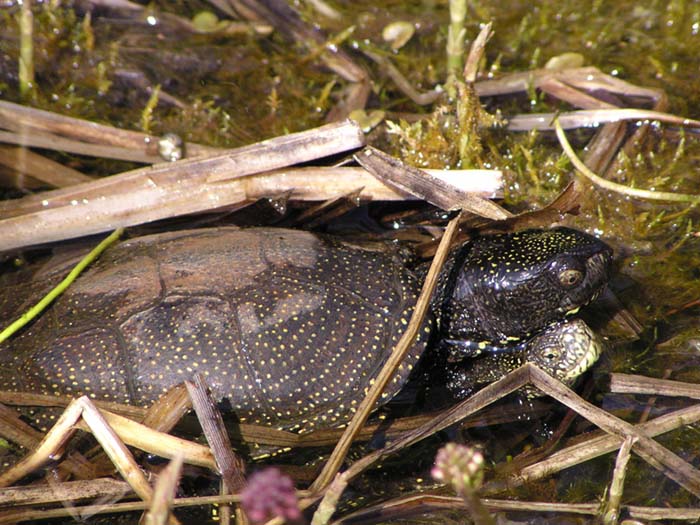
Emys turtle from http://en.wikipedia.org/wiki/Emys
While a decent anagram with two "y" and four "e" still hides under the carpet (much better ones related to Alain Connes, Fields medalist), see my very appreciation to Yves Meyer's Carl Friedrich Gauss price (here in French), four years after Kiyoshi Itō. At ICM 2010, it is said that, along with his work on wavelets ("wavelet theory has become the new name for Fourier analysis", gosh!),
[...] he has found a surprising connection between his early work on the model sets used to construct quasicrystals — the ‘Meyer Sets’ — and ‘compressed sensing’, a technique used for acquiring and reconstructing a signal utilizing the prior knowledge that it is sparse or compressible.
Which should please Igor Carron, of course. Every emys knows that every four years, Fields medals are attributed to talented mathematicians. The country of course honors Ngô Bao Châu (fundamental Lemma in the theory of automorphic forms through the introduction of new algebro-geometric methods) and Cédric Villani (proofs of nonlinear Landau damping and convergence to equilibrium for the Boltzmann equation, yet  being director of IHP), along with Elon Lindenstrauss (results on measure rigidity in ergodic theory, and their applications to number theory) and Stanislas Smirnov (proof of conformal invariance of percolation and the planar Ising model in statistical physics). The Nevanlinna Prize and the Chern Prize go to Daniel Spielman  and Louis Nirenberg respectively.

Let us end this with a typical mathanagram:
  • What’s an anagram of Banach-Tarski?
  • Banach-Tarski Banach-Tarski.

July 23, 2010

The turn of a friendly card - Train numbering trick

Coming back from Orléans (France) on March 2010 for the Second conference  "Mathematics and Image processing" (Deuxième colloque "Méthodes mathématiques pour l’image") organized at MAPMO. Having presented stuff on Statistical estimators based on Stein's principle for  M-band wavelets and filter banks (abstract, slides, codes). Waiting in a train, staring again (and pixing) at the eight-seat compartment  numbering once discussed here

Since Igor Carron posted this Magic trick for summer vacations on Nuit Blanche (constest won by Laurent Jacques), I propose the following one again. Pictures attest the realness of the data, in contrast to Igor thought experiment (vicious tackle). Seat numbering is split in odd and even (unlike in six-seat cars), face-to-face, as:
.1 .3 .7 .5
.2 .8 .4 .6
The 3 (mod 8) sum is obvious. Easy enough for front-to-front booking by ancient computers. So why not the simple child Gauss-like arrangement?
.1 .3 .5 .7
.8 .6 .4 .2
Suspect some kind of compressive coding of seat booking? Contributions welcome. 

One good reason to listen on Nits again - The train. TGIF; my train of thoughts is leaving (le train de mes pensées s'égare).


Or Alan Parson's project - Turn of the friendly card:


July 21, 2010

Leurrer ? Détrompez-vous ! - Dompterez-vous l'erreur ?

Source : http://cereales.lapin.org/ (705)
On doit à René Thom (médaille Fields 1958) : "ce qui limite le vrai n’est pas le faux, mais l’insignifiant" [Paraboles et Catastrophes, Champs Flammarion, p. 127] (citation déjà évoquée à propos de l'antienne sur l'infobésité, ou la surabondance d'information de notre monde). On attribue à Wolfgang Pauli, pestant contre un article de physique sans  intérêt,  "ce n’est pas juste et, pire, ce n’est même pas faux !" (cf. WikiQuote on Pauli).

Cette idée n'est pas toujours évidente (voire contre intuitive) pour les élèves, étudiants, le grand public et - voire - pour une partie des contributeurs à la recherche scientifique.

Le festival "Science jeune public" (et peut-êre même les moins jeunes) oeuvre cette année dans le sens de cet éclaircissement sous le titre : Détrompez-vous (du 21 au 24 juillet 2010 à l'Ecole normale supérieure)

La Journée Grand Public qui aura lieu le samedi 24 juillet est ouverte à tous, sans réservation préalable. Extrait :
Les intervenants du festival vont s’efforcer cette année de faire tomber une idée reçue : l’erreur serait négative ! Dans tout processus d’apprentissage, comme dans la recherche, c’est en remettant en question des conceptions fausses que l’on progresse : il y a des erreurs nécessaires. Sur ce thème, qui vise à inciter chacun à oser entreprendre, de nombreux chercheurs, artistes, médiateurs, passionnés de sciences feront de ce festival un moment d’échanges intenses.

 Alors, négative, l'erreur ? Résolument pas ! L'erreur a pour racine latine l'errance... Et s'égarer, sortir des sentiers battus : n'est-ce pas la voie de la créativité ? Osons donc explorer les chemins broussailleux où mènent les errances... Pour mieux rebondir, prenons le risque de nous tromper !
A diffuser aux ames curieuses : ateliers, animations, spectacles... On se quitte pour ce soir sur Jorge Ben : Errare humanum est ["A Tábua de esmeralda", 1972].


July 19, 2010

Upcoming SIVA signal and image conferences - Concern fees

Today we update on the SIVA: Signal, Image, Video and Applications conferences page.


Long time ahead is ICASSP 2014 website running. Not much information yet, execpt in this information pdf file, like a call to image processing tools like inpainting. ICIP 2013 (Melbourne, Australia), ICASSP 2013 (Vancouver, Canada) are open but scarse as well.

Closer from us, SAMPTA 2011 held in Singapore (deadline on 01/10/2010), ISCAS 2011 in Rio de Janeiro, Brazil (deadline on 29/09/2011, sooner for Special sessions), ICASSP 2011 in Prague, Czech Rebublic (deadline on 20/10/2010), ICCV 2011 in Barcelona, Spain (deadline on 01/03/2011). ICIP 2011 in Brussels, Belgium, has no deadline for now. MWSCAS 2011, once believed in Brazil, will be in fabulous Seoul, South Korea (deadline 04/03/2010). SIVA would not be complete without the annual Conference on Digital Image Content Knowledge, held in Chicago, Illinois, USA. For myself, i will try to enjoy the shores of Saint-Malo at LVA/ICA 2010, the ninth conference on latent variable analysis and signal separation.


All this comes with a nomade gift: Skype version 5.0 for a portable use on a usb key.For people who like to do it themselves, look here.

July 10, 2010

Time is the simplest (non-commutative) thing


One of the most elegant theorems of all times is 4-word: every finite field commutes (Wedderburn's little theorem). While having life-long interests in anagrams and questions about time, i never thought they were related. They are. Thanks to the conference: Un espace non-commutatif engendre son propre temps, by Alain Connes on 06 November 2007 in Metz, France (downloadable video, 220 Mb, flv format, since i failed in embedding it into the blog).


Alain Connes is both a tremendous mathematician and wonderful, passionate story-teller. A cryptic message by a friend's child:
Je suis Alençonnais, et non alsacien, si tu veux un conseil nana, rendez-vous au coin annales
and a story about book reading by japanese mathematician Minoru Tomita (and related results) lead us to a lesson on associativity and commutativity rules. Anagrams are possible only because written language is associative and non-commutative (no alternative!). Meaningful anagrams (such as seen in Remaniement) are seen as a commutative breach. What is important, says Alain Connes, is poetic spirit (not foreign to mathematics) and a clue on where you are heading (if you do not change direction, see Lao Tzu). Without too much mathematics, Connes conveys those insights (with Carlo Rovelli) that the sense of duration may well arises from the statistical state of a system, quite like temperature. A relic of the antic  3 K radiation of the Universe. Funny enough, both French and Italian languages have very close words for time (temps/tempo) and temperature (température/temperatura). Could they be physically closely related, as real and imaginery parts of a complex number? Do algebra have periods? Look at the audience questions at the end of the talk. See also: Alain Connes : une autre vision de l’espace.

Arte also proposes a series of questions to Carlo Rovelli, interestingly pertaining to the life of a physicist. Alain Connes book on Noncommutative Geometry is freely available in pdf. Clifford D. Simak (not the - associative - algebra) wrote one of the most poetic sci-fi book on time travel, Time is the simplest thing (Le pêcheur en langue française). M. Dhenin shares a series of radio broadcast in a Mindmap for time (in French).

July 3, 2010

Dimension-reduction, High-dimensional problems and solutions, Workshop, June 2010

In epochs of information overload (or overlook), salvation comes from conferences like the HDPS 2010 workshop organized on 21 and 22 of June 2010 on High Dimensional Problems and Solutions, with Ron DeVore (Dep. of Mathematics,Texas A&M University, USA, recipient of the Foundation's Research Chaire of Excellence 2009) and Albert Cohen (UPMC, LJLL). Indeed:
Several important areas of science are confronted with the having to recover a functions of many variables either from large data sets or from complex mathematical models. Such recovery is inhibited by what is commonly called the 'curse of dimensionality' which says the numerical approximation of such a function will require inordinately more computation as the number of active variables increases. This workshop bring together the world's leading experts on high dimensional problems to discuss their recent research in areas such as manifold learning, stochastic and parametric PDEs, and optimal recovery.
The program was terrific:
  • Steve Smale (City University of Hong Kong) "Hodge Theory"
  • Mauro Maggioni (Duke) "Multiscale geometric methods for the analysis of points clouds"
  • Gilad Lerman (Univ. of Minnesota) "Multi-Manifold Data Modeling: Foundations and Applications"
  • Christoph Schwab (ETH Zurich) "Sparse Tensor Approximations of PDEs on high-dimensional parameter spaces"
  • Yvon Maday (Paris VI) "Reduced basis and magic point for high dimensional approximation problems"
  • Wolfgang Dahmen (RWTH Aachen) "A greedy approach for the reduced basis method - Convergence rates"
  • Emmanuel Vasquez (Supelec) "Gaussian processes, RKHS and their applications to computer experiments" 
  • Przemek Wojtaszczyk (Univ. Warsaw) "Approximation of functions of few variables in high dimension "
  • Dominique Picard (Paris VII) "LOL: thresholdings and high dimensions"
  • Rob Nowak (Univ. of Wisconsin) "Adaptive and Nonlinear Designs for Large-Scale Multiple Hypothesis Testing"
  • Martin Wainwright (Berkeley) "Recovery problems in high dimensions: A unified analysis of estimators with decomposable regularizers"
  • Stephane Mallat (Polytechnique) "High dimensional classification by recursive interferometry"

As i could not attend, i am glad that most of it is now available as webcasts (gather at Foundation Sciences Mathématiques de Paris), as potential take-aways for summer holidays:

Mauro Maggioni (Duke): "Multiscale geometric methods for the analysis of points clouds",

Steve Smale (City University of Hong Kong): "Hodge Theory",

Stephane Mallat (Polytechnique): "High dimensional classification by recursive interferometry",

Martin Wainwright (Berkeley): "Recovery problems in high dimensions: A unified analysis of estimators with decomposable regularizers",

Rob Nowak (Univ. du Wisconsin): "Adaptive and Nonlinear Designs for Large-Scale Multiple Hypothesis Testing",

Wolfgang Dahmen (RWTH Aachen, joint work with Peter Binev, Albert Cohen, Ronald DeVore, Guergana Petrova, and Przemyslaw Wojtaszczyk): Convergence Rates for Greedy Algorithms in Reduced Basis Methods,

Peter Binev (Univ. Caroline du Sud): "Sparse Occupancy Trees",

Gilad Lerman (Univ. of Minnesota): "Multi-Manifold Data Modeling: Foundations and Applications",

Emmanuel Vazquez (Supelec): "Gaussian processes, RKHS and their applications to computer experiments",

Yvon Maday (UPMC): "Reduced basis and magic point for high dimensional approximation problems",

Przemek Wojtaszczyk (Univ. de Varsovie): "Approximation of functions of few variables in high dimension",

Dominique Picard (Université Paris-Diderot Paris-7): "LOL: thresholdings and high dimensions", http://www.dailymotion.com/video/xds3nm_lol-thresholdings-and-high-dimensio_tech
For dessert, a smoother video on "are soap bubbles all round?"


Thank you Igor for referencing.

June 25, 2010

Minotaure, tu dois finir ta thèse (Simon Berjeaut), paroles

Simon Berjeaut était l'invité de Grantanfi (doctorants, l'avenir dure longtemps) sur France Culture le mercredi 21/11/2012.

Simon Berjeaut est l'auteur de la chanson du Minotaure, ou "Tu dois finir ta thèse", message d'espoir en chanson pour les doctorants et doctorantes en mal de manuscrit, dont je vous avais parlé il y a deux mois, et qu'Igor Carron avait proposé de rendre viral sur YouTube. La vidéo se télécharge . Et les paroles sont un peu plus bas... En passant, un coucou à mes doctorantes et doctorants en cours et diplomé.e.s : Caroline Chaux, Jérôme Gauthier, Mai Quyen-Pham, Aurélie Pirayre, Arthur Marmin, Lauriane Bouard, Sarah Fajon, Surabhi Jagtap, Louna Al Souki, ainsi que Colombe Vendeuvre et Cyril Faure.


Maurits Cornelis Escher : Angels and Demons (1942)
C'était à l'époque cendreuse de Eyjafjallajökull, et cette chanson évoque le piton de la Fournaise. Pourquoi le Minotaure ? Pour Thésée, l'homme perdu dans le labyrinthe que seul un fil ténu rappelle vers l'issue, une métaphore taurine illustrative du parcours de rédigeant de chaque doctorant. Thêseús comme Odysseus tant la parcours semble voyage sans fin, mais borné, comme l'univers Lorentzien de M. C. Escher de "anges et démons", ou disque hyperbolique de Poncaré. Mais aussi l'évocation de cette période surréaliste, par Minotaure, revue d'avant-guerre (la seconde) qui a fait diffuser des Roberto Matta, Alberto Giacometti, Hans Bellmer, Victor Brauner ou Tristan Tzara. Les deux derniers me rappelant un voyage en Roumanie. Roumanie + T = Minotaure (anagramme faible).

Les paroles ? Les paroles !

Victor Brauner, Hypergenese de la Reapparition (1932)
Où est ton regard de braise
Et tes airs conquérants
Tes épaules en trapèze
Et ta belle énergie
Tu as le regard qui biaise
De tous les doctorants
Et tu deviens obèse
Pris dans ta léthargie

Tu dois finir ta thèse

Ton esprit de synthèse
Ta volonté de fer
Et ton désir d’ascèse
Se sont-ils envolés ?
Au pied de la falaise
Tu ne sais plus comment faire
Ta volonté de glaise
Il faut la remodeler

Tu dois finir ta thèse

Ce soir c'est reparti
Tu t'enfermes chez toi
Tu vas finir ta thèse
Ta décision est ferme
Ou au moins une partie
Ou bien le petit trois
Ou bien la parenthèse
Qu'il faut que je referme

Tu dois finir ta thèse

Tu vas finir demain
Tu dois finir le seize
Tu vas finir en juin
Bon, tu reprends une 16
Tu fumes un dernier joint
Et soudain tu t'apaises
Et doucement tu rejoins
Le mouvement des sans-thèse (fois trois)

Comme le dit Marie-Thérèse
Ta voisine martiniquaise
C'est comme le piton de la fournaise
Ça prendra comme une mayonnaise
C'est des foutaises
Tu vas finir ta thèse

Comme le dit Madame Hernandes
Dans sa sagesse toute portuguaise
Si aujourd'hui "nada se fez" (rien ne se fait)
"vai ficar para outra vez" (ça sera pour une autre fois)

C'est des fadaises !
Tu vas finir ta thèse

Tu aimerais trouver un max de pèze
Caché dans une attaché-case
Tu partirais à Saint-Tropez
Tu irais faire du steeple-chase

Tu ferais pas ta thèse
Tu ferais plus du tout ta thèse

Même si la vie te pèse
Écarte l'hypothèse
De finir ta thèse
Au père Lachaise
Enfile tes charentaises
Rassieds-toi sur ta chaise
Pas besoin de chanter la Marseillaise
Mets-toi à l'aise
Tu vas finir ta thèse

Et ne vous en déplaise
Et tant pis si j'ai tord
Mais il me semble plus aisé
De poursuivre une thèse
Plutôt qu'un Minotaure
Tout le monde peut pas être Thésée
Thésée, Thésée

Mais taisez-vous
Punaise !
[Quelle prise de thèse ?]

Tu vas finir ta thèse...
Tu vas finir ta thèse !

C'est infinissable
... Mais tu vas la finir
C'est insoutenable
... Mais tu vas la soutenir

Tu vas la finir
Tu vas la soutenir
Tu vas la publier, qui sait ?

Tu vas finir ta thèse

June 10, 2010

Information overload - And no more trivia, fool!

[Update 2014/05/20 with Ann Blair publications] There is a recent concern about information overload. Or is there? According to the following independent sources:
the problem is not so recent. Ann Blair already informed us in 2003 that there were Reading Strategies for Coping with Information Overload ca. 1550-1700:
The "multitude of books" was a subject of wonder and anxiety for authors who reflected on the scholarly condition in the sixteenth through the eighteenth centuries. In the preface to his massive project of cataloguing all known books in the Bibliotheca univeralis (1545) Conrad Gesner complained of that "confusing and harmful abundance of books," a problem which he called on kings and princes and the learned to solve.  By 1685 the situation seemed absolutely dire to Adrien Baillet, who warned:
"We have reason to fear that the multitude of books which grows every day in a prodigious fashion will make the following centuries fall into a state as barbarous as that of the centuries that followed the fall of the Roman Empire. Unless we try to prevent this danger by separating those books which we must throw out or leave in oblivion from those which one should save and within the latter between what is useful and what is not."
In this way Baillet claimed to have warded off barbarity itself with his collection of judgments on the learned in his nine-volume (and still only half-completed) Jugemens des sçavans
The "information overload" or "scholar big data" is push further in: Too Much to Know. Managing Scholarly Information before the Modern Age (2010):
The flood of information brought to us by advancing technology is often accompanied by a distressing sense of “information overload,” yet this experience is not unique to modern times. In fact, says Ann M. Blair in this intriguing book, the invention of the printing press and the ensuing abundance of books provoked sixteenth- and seventeenth-century European scholars to register complaints very similar to our own. Blair examines methods of information management in ancient and medieval Europe as well as the Islamic world and China, then focuses particular attention on the organization, composition, and reception of Latin reference books in print in early modern Europe. She explores in detail the sophisticated and sometimes idiosyncratic techniques that scholars and readers developed in an era of new technology and exploding information.
Listen to 23' of Clay Shirky at Web 2.0 Expo NY, 19 September 2008, where you learn, along  the movie narration flood, "It's Not Information Overload. It's Filter Failure":


The "multitude of books" was a subject of wonder and anxiety for authors who reflected on the scholarly condition in the sixteenth through the eighteenth centuries. In the preface to his massive project of cataloguing all known books in the Bibliotheca univeralis (1545) Conrad Gesner complained of that "confusing and harmful abundance of books," a problem which he called on kings and princes and the learned to solve.1 By 1685 the situation seemed absolutely dire to Adrien Baillet, who warned [...]

So apparently, the information overload problem is no novelty. Looks like information is riding an exponential wave, as in the standard chart (left), whose derivative is just about an exponential. Reminds me of the following joke: $1$ and $e^x$ sit in an old favorite room of a restaurant. Waiting for food arrival - noontime. Suddenly, $1$ gets terrified and cry at $e^x$: "hide me, hide me, here enters a derivative operator!". Proud and fierce,  $e^x$ hides the constant behind her back, and defies the operator: "i am $e^x$, i don't fear you". "Sure!" the operator replies, "i am $\frac{\partial}{\partial y}$". 
As Clay Shirky says, "If you have a problem for a long time, it's not a problem... Maybe it's a fact!" (IMHO probably emphasized by the Internet/media mode of "content creation", more than often a mere duplication (pure redundancy) or basic distorsion (jamming) of pre-existing content, with reduced added value), to fill the media tubes and pipes (forlorn media ovation). Since more and more people write, blog, tweet and buzz about IO, further adding low valued load. IO might just be neither a true problem nor a false one. René Thom (in Paraboles et Catastrophes, Champs Flammarion, p. 127) reminds us that "Ce qui limite le vrai n’est pas le faux, mais l’insignifiant", approximately translated to "What limits truth, it is not forgery but trifle/insignificance" (quote courtesy of Olivier Rey, whose Itinéraire de l'égarement deserves close reading, admiration of no lover). IO as an inane vomit flood roar (sounds like a death metal song title, but only an anagram).

Yet still assuming that "more data = better decisions", some argue that the "real problem is the lack of efficient strategies to index, summarize, filter, cross-reference and archive information", or propose "A Framework for Information Overload Research in Organizations Insights from Organization Science, Accounting, Marketing, MIS, and Related Disciplines" (Eppler, Mengis, 2003). But more insignificant data may as well lead to zero decisions, as gaussian disturbances may vanish as the square root on the number of observations. Second thought, not so much with rounding, see Statistical Analysis for Rounding Data (Zhidong Bai, 2006). The current trend in signal or image processing is generally similar: acquire more data, at higher frequency, with more precision (watch out, formation on evil road), hoping signal processing, statistics and data mining will cope with the flood and deliver precious information. An extreme example arises in seismic processing, where petabytes of data ("but also storage systems that can handle petabytes of data daily") are gathered. Yet, due to the computational burden and memory footprint, the relative time spent on "fine processing" with respect to data reading, loading, handling, sorting seems tiny.

Thank to the availability of low cost sensors and band-width, the data overload plague is spreading. More and more data, less and less time to process it properly, massive low-quality batch filtering are favored. Signal and image processing enter the dark area of weak signals and information overlook. I pray everyday (no variation of me, Lord) for my colleagues to tell me: next step, we are going to acquire much less signals (and favor no more dilation of disk space), to spend the remaining time on their processing.

Film-opéra-concert Ariodante

  #Ariodante de #Händel par les Arts Florissants  en opéra-concert-film est #amazing ; trois raisons, deux futiles.  c'est 16 euros, ...